Sunday, August 2, 2020

Photography art Gallery Friday Round Up - 21 March, 2014|Photography Art Definition

Exhibition:

MikiNobu Komatsu - Selected Works

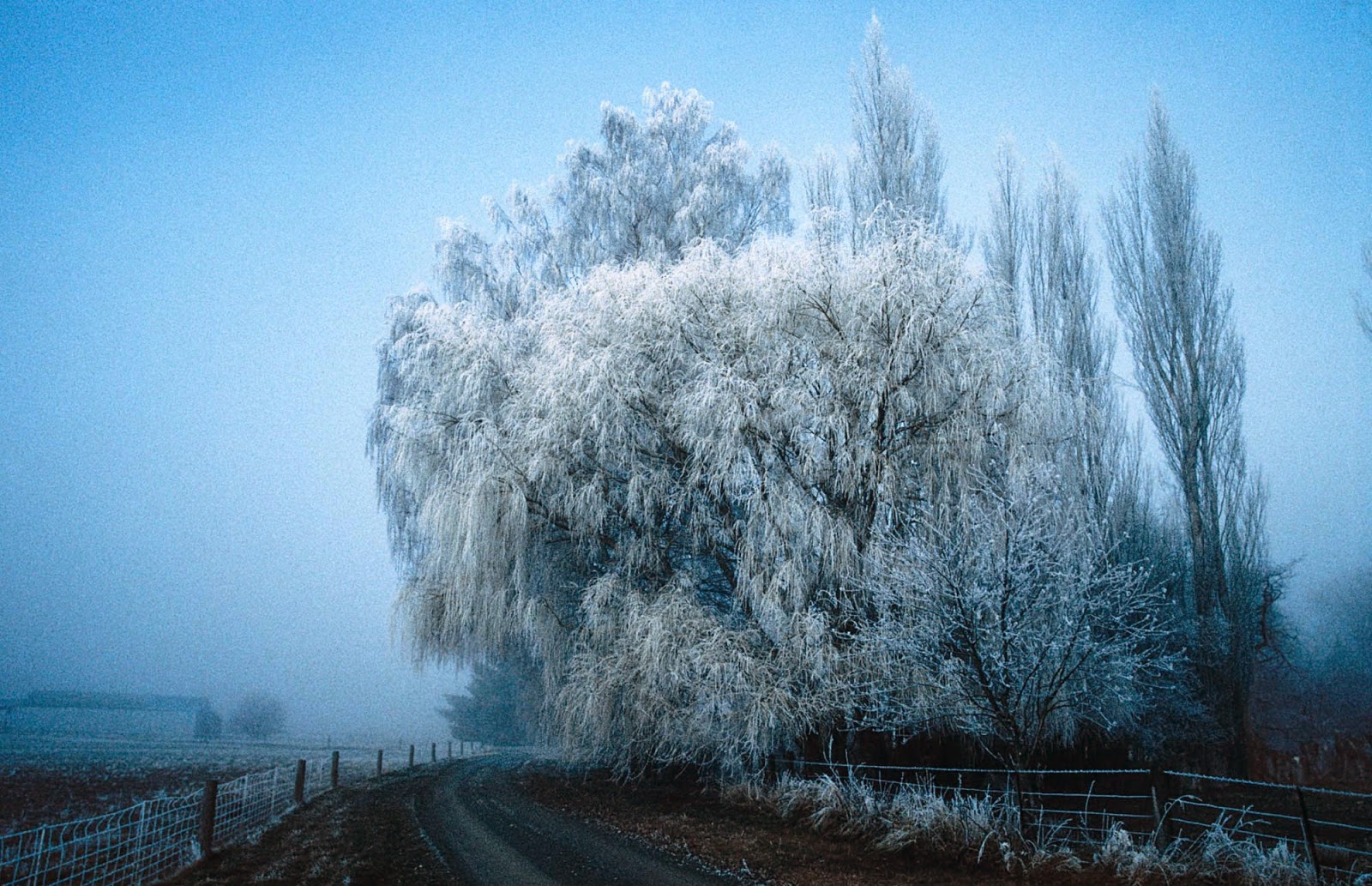
Having taken photographs in both hemispheres there is no doubt the light in Australia, and New Zealand, is very different to the softer light in Europe, or the light of neighboruing Asia, where pollution in the atmosphere often masks the horizon and humidity leaves the air thick with noise.

Here we still have the benefit of relatively clean air bringing a true clarity of light, which Japanese-born photographer MikiNobu Komatsu says “is vivid and obvious. This “rich and strong light” captured Komatsu’s imagination when he first came to Australia in the late 1970s. Since that time he has created a vast body of work focusing on landscapes in both Australia and New Zealand the latter of which is the subject of his Selected Works exhibition currently on show in Sydney at Black Eye Gallery.

Comparing the light of the Antipodes to his homeland, Komatsu says, “Here the light is much more visible. Every moment is so interesting, the way light changes from early morning to late afternoon and sunset…it’s such a different quality. When I arrived in Australia for the first time in my life I started to look at what was around me, at my environment. I became intrigued by what I saw and that’s what inspired me to start taking photographs”.

(C) All Images MikiNobu Komatsu

For the past 30 years Komatsu has focused his lens on the environment, particularly drawn to remote vistas where sky and earth meet in soaring mountains and vales, where waters reflect the light in steel-like tones and where frosty nights and clear days bring endless visual stimuli.

The exhibition at Black Eye features around 25 works, which are taken from Komatsu’s self-published book ‘Light Moods South’. The book features Haiku poetry alongside each image. “I like the simplicity of Haiku, but it also has depth, what you could call complex simplicity, so it complements my photographs because they are both simple and layered also.”

“I like to think that my photographs convey the emotions I felt shooting at that moment when I encountered such beauty in nature,” he concludes.

Until 6 April

Artist Talk – Saturday 22nd March 2pm

MikiNobu Komatsu Selected Works

Black Eye Gallery

3/138 Darlinghurst Road

Darlinghurst (Sydney)

Exhibition: Melbourne

A Selection of Works by Wolfgang Sievers

Raising funds for Human Rights Causes

"Gears"Wolfgang Sievers

Considered one of the world's great industrial and architectural photographers, Wolfgang Sievers (1913-2007), a student of Bauhaus, fled Nazi Germany for Australia at the outbreak of WWII. In 1939 he opened his photographic studio in Melbourne and became one of Australia’s most renowned photographers with his work collected here and internationally.

When he died in 2007 he bequeathed his print archive to Human Rights lawyer and advocate Julian Burnside AO QC, with all proceeds from the sale of these works going to the pursuit of human rights. His final public speech, which consisted entirely of three words, encapsulated his desire for humanity: "One word. Compassion".

Burnside says his association with Sievers began around 2003 when he bought a series of 92 framed photographs. The pair struck a friendship and before he died Sievers gave Burnside his collection of prints to use as he saw fit in order to benefit human rights causes.

“He drove around to my place one day and delivered all of these boxes, about 14 of them”. Inside one box was a print of his now famous “Gears” photograph (above) with a Post It note saying ‘this is the best print of this photograph ever’. Sievers was an absolute perfectionist, and the significance of this handwritten note is not lost on Burnside who is holding back that photograph in the hope that it will command a high price. “I won’t take less that $50,000 for that one,” he says.

Burnside believes the popularity of Sievers work, which has increased posthumously, is “partly because people with the right money can see the quality of the work and know that there won’t be anymore around. Also people do respond to the fact that proceeds go to human rights causes and not into someone’s pocket”.

An exhibition of 51 photographs taken by Sievers between 1933 and 1977 opens in Melbourne on Tuesday 25th March, presented by Liberty Victoria.

(C) All images Wolfgang Sievers Archive

25 March to 5 April, 2014

fortyfive downstairs

45 Flinders Lane

Melbourne

Photo Essay:

Grozny: Nine Cities

Grozny: Nine Cities is a project by three Russian photographers - Oksana Yushko, Olga Kravets and Maria Morina – who have been documenting the societal shifts in this war-torn capital of Chechnya since 2009. Of their ongoing study the trio says “Our project Grozny: Nine Cities is inspired by a Thornton Wilder book, Theophilus North, and centers on the idea of nine cities being hidden in one, which gives us a concept to explore specific aspects of the aftermath of two Chechen wars considering them as 'cities' hidden within Grozny.” Here are a selection of images taken by Oksana Yushko.

(C) All images Oksana Yushko

To find out more about this project click here.

Exhibition: Sydney

Trent Parke – The Camera is God (street portrait series)

Opening next week at Stills Gallery in Sydney is Trent Parke’s latest exhibition. In this show Parke, who is the only Australian member of Magnum Photos, takes us back to his street photography roots with a series of photographs featuring anonymous people standing on street corners. Here “Parke’s camera is all-seeing, non-judgmental, indiscriminate. If you stand before it, unwittingly, it will see you. If the timing is right, it might capture you. Within this sequence of images, a beautiful alchemy takes place – a combination of life and chance, light and photographic chemicals. The resulting body of work allows us to see anew and to find ourselves amongst the crowd. In installation, around the gallery walls, the portraits are encompassing, turning the tables on who in the gallery might be the viewers and the viewed.”

(C) All images Trent Parke courtesy of Stills Gallery

26 March to 3 May 2014

Stills Gallery

36 Gosbell Street

Paddington (Sydney)

Exhibition: Melbourne

Formality

Reminder: Opening Saturday 22 March

(C) Paul Batt

This group show features works from the Monash Alumni including Daniel Boetker-Smith, Ross Coulter, Siri Hayes, Kristian Häggblom, Katrin Koenning, Georgia Metaxas and Paul Batt. Opening tomorrow.

Trocadero Art Space

Level 1

119 Hopkins Street

Footscray Melbourne

19 March to 5 April

Opening event Saturday 22 March 4-6pm


Photography art Gallery Friday Round Up - 9 May, 2014|Photography Art Definition

For the next two weeks Friday Round Up will focus on Australia's largest photographic festival, Head On Photo Festival which officially opens in Sydney on 16th May and runs through until 8th June. In its fifth outing Head On will feature more than 900 photographers across 140 galleries in a celebration of photography in all its forms.

This week Friday Round Up showcases some of the Australian talent, but the programme is incredibly diverse and this selection should be taken as a teaser only for what's in store. Next Friday we will be blogging directly from the Festival's opening weekend. Check out the Festival website here.

Featured this week are Australians Nicola Dracoulis, Jarrad Seng, James Horan, Leon Gregory, Kerry Pryor, Ludlites Love Light and Olive Cotton and Sally McInerney. Plus there are photo galleries from Alec Dawson and Lisa Garland. Enjoy the feast of photography that lies ahead.

Nicola Dracoulis

Viver no Meio do Barulho

(Living in the Middle of the Noise)

Melbourne photographer Nicola Dracoulis’ exploration of nine young people living in Rio’s favelas is gripping. Shot in 2006 and 2013 in this series of portraits Dracoulis revisits the same people seven years apart capturing both the changes in individuals and their habitats.

Above images (C) Nicola Dracoulis

29 May to 9 June

Gaffa Creative Precinct

281 Clarence Street

Sydney

Jarrad Seng

A L L T E R V A T N A holiday to Iceland in 2013 provided an unexpected opportunity for 26-year-old Perth photographer Jarrad Seng to experiment with aerial landscape photography the outcome of which is a stunning collection of aerial photographs of Icelandic water flows that are reminiscent of abstract paintings.

Above images (C) Jarrad Seng

5-31 May

The Arthouse

275 Pitt Street

Sydney

James Horan

Irish HorseWhen Irish-born photographer James Horan was growing up in a housing commission estate in Limerick he was warned to keep away from the ‘Travellers’ as the Irish gypsies are known. “Crazy, dangerous people, that you didn’t want to associate with,” he says. But after spending five years documenting the lives of the Travellers Horan has come away not only with a unique view, but also a deep appreciation and concern for these misunderstood and often maligned people.

Above images (C) James Horan

21 May to 14 June, 2014

Brenda May Gallery

2 Danks Street

Waterloo

Leon Gregory

At Last - The Seventies

In the early 1970s Sydney photographer Leon Gregory was an aspiring actor who made ends meet by shooting portfolios for his fellow thespians. In his spare time he used his camera in classic street photography style taking photographs of random people that crossed his path. Little did he know that forty years later his eclectic collection of shots of Sydney’s inner city enclaves - Kings Cross, Darlinghurst, Woolloomooloo, The Domain, the City, Glebe and Balmain – taken between 1970-1973 would prove somewhat of a time capsule.

Above images (C) Leon Gregory

24 May to 13 June

Ginkgo Gallery

166 St Johns Road

Glebe

Kerry Pryor

Who Lives Here In Ethiopia almost five million children have lost one or both parents to AIDS, famine, war or disease. The children, known as the “Lost Generation” are mostly left to fend for themselves and often end up living on the street. Since 2011 Australian photographer Kerry Pryor has been documenting the lives of children under the care of 'Beyond the Orphanage' and in her exhibition “Who Lives Here” she shares her experiences.

Above images (C) Kerry Pryor

12 May-29 June

Leichardt Library

23 Norton Street

Leichardt

Ludlites Love Light

Group Show

This exhibition features images taken on “plastic cameras” by various members of the Ludlites photographic collective, an ever-expanding group of enthusiasts who are taken by the unpredictability of images made on plastic cameras.

(C) Anika Luzemann

(C) Patrick Boland

Curated by Australian photojournalist and art photographer Steven Siewart, Ludlites Love Light showcases an exciting collection of what can be achieved in lo-fi photography when one combines imagination, a pinch of technical know-how and loads enthusiasm and patience.

The Ludlites’ spokesperson on this occasion is long-time plastic camera enthusiast and photographer Tim Hixson who first came across the plastic model in the 1970s when he was studying photography in the US.

He tells that in those days plastic cameras were “about a dollar each” and that photographing with them was somewhat of a respite from the heavily technical practice that was professional photography in pre-digital days.

(C) Terry Hixson

Shooting with the plastic cameras was more of an intuitive activity rather than being reliant on the technical aspects of photography. That’s not to say there isn’t any technique involved in shooting with these cameras. Quite the contrary says Hixson.

“There is a lot of technique to using these cameras, but you have to let go of the technical and follow your instinct more. With these cameras you are never guaranteed of the shot you think you’ve got and you never feel like you are in control, but that is part of the whole experience. They have one shutter speed and one fixed F-stop so you have to work around these issues and that makes you more patient. Shooting with these cameras you tend to go into it with an idea rather than creating it later in the computer.”

Hixson says because of the lack of control and the freedom of experimentation that comes with the randomness of the experience, ego falls away and “you realise the humility of it all”.

He explains that with these plastic cameras it’s all about the light and “seeing it and getting it is more difficult on a plastic camera”. But that’s all part of the fun, he insists, and making mistakes, and often discovering something wonderful in those errors, is fundamental to the experience.

 (C) Craig Proudford

(C) Heleana Genaus

“For me there is a truthfulness with film, you start from a true perspective and the film binds you to traditional photo values that you then set out to break with the plastic camera which is so simple it’s intriguing,” states Hixson who runs workshops on the topic. “I love seeing people have fun with it. You can’t control it so you have to accept what you get, but you can go back and try again and in that way you are training your mind”.

13-24 May

Workshop: 12noon-4pm Saturday 17 May - open

The Depot Gallery

Danks Street

Waterloo

Mother & Daughter: A Conversation

Sally McInerney and Olive Cotton

(C) Olive Cotton

(C) Sally McInerney

At this year’s Head On Photo Festival photographer Sally McInerney will exhibit for the first time alongside her mother Olive Cotton who is regarded as a pioneer of modernist photography in this country.

Cotton’s story is well known in photography circles. Married to renowned photographer Max Dupain in the late 1930s Cotton ran Dupain’s studio while he was at war and in the process honed her skills as a master printer. Their marriage was short-lived and later Cotton married farmer Ross McInerney moving to the country and shelving her darkroom skills for nearly 20 years.

But Cotton never stopped taking photographs with her Rolleiflex camera even if she was unable to make prints. “She wasn’t expected to leave behind her photography when she got married,” says daughter Sally McInerney. “The camera was a feature of our domestic life. Sometimes someone would see something remarkable and mention it to Olive and off she’d go”.

(C) Olive Cotton

(C) Olive Cotton

(C) Sally McInerney

(C) Sally McInerney

Sally caught the photography bug early after being given her first camera at the age of eight. There ensued her lifelong passion, which she says really grew organically and was encouraged by the natural curiosity of her family in the world about them.

“Living in the country certain things were generally always remarked on like cloud formations or the rain or the shapes of trees, especially dead trees,” she says. “In our family it was very normal for someone to say look at this great skeleton leaf or that flocks of birds. Anyone of us - my brother, father, mother or I - would comment on something and the rest of us would be interested. There was such a lot around our little old house, such a lot to look at outside, and that was interesting to us all.”

The McInerney’s worked a subsistence farm about 25 kilometers from Cowra in rural New South Wales. Sally recalls growing up without electricity or running water in an old house that was “falling down”. It wasn’t until 1964 that Cotton went back into the darkroom opening a small studio in Cowra.

“My mother and I both had a long consistent practice of taking photos although there were breaks for technological reasons,” explains Sally. “We got the films processed elsewhere, but always looked after the negatives and printed when we could.”

‘A Conversation’ is an exhibition that features the black and white work of Cotton and Sally’s colour photographs. She tells me that the idea to do a combined exhibition was first mooted by curator Sandy Edwards.

“As I began to think more about it I realised there were a lot of echoes and associations common to both of us, but in particular to some of my images. My mother never took very dark or scary looking or candid photos and I do those, but in this show the selection shows those echoes and references between both sets of photos.”

I imagine that she and Cotton had long discussions about photography, but Sally refutes that notion. “My mother and I never had a serious photographic critiquing session”.

And the pair never shot together. “We didn’t call it shooting it was just taking photographs,” she states. “My mother was quite shy and unobtrusive in her photographing manner. I like to wander around old back streets of funny looking towns and talk to strangers and take their photos. She didn’t do that, but then generally women didn’t at that time. But we both had a similar appreciation of certain things, mostly nature and solitude, aspects of solitude and we did sometimes talk about the beauty of the occasional. In this show the mood is fairly sympathetic between this selection of my images and hers,” Sally ends.

Mother & Daughter: A Conversation

Sally McInerney and Olive Cotton

13-24 May

Damien Minton Gallery

583 Elizabeth Street

Redfern

Alec Dawson

Nobody Claps Anymore

Nobody Claps Anymore

6 May – 24 May

He Made She Made

70 Oxford St

Darlinghurst

Lisa Garland

7 May - 7 June

Stills Gallery

36 Gosbell Street

Paddington