Showing posts with label Foam. Show all posts

Wednesday, July 22, 2020

Photography art Gallery Friday Round Up - 3rd October, 2014|Photography Art Definition

This week on Friday Round Up two new exhibitions for Melbourne, Ruth Orkin in Los Angeles and René Burri in Paris, 2014 Foam Talents, plus a panel discussion on war photography in Sydney, and Vlad Sokhin’s Crying Meri book review.

Exhibitions: Melbourne

Paul Blackmore – One
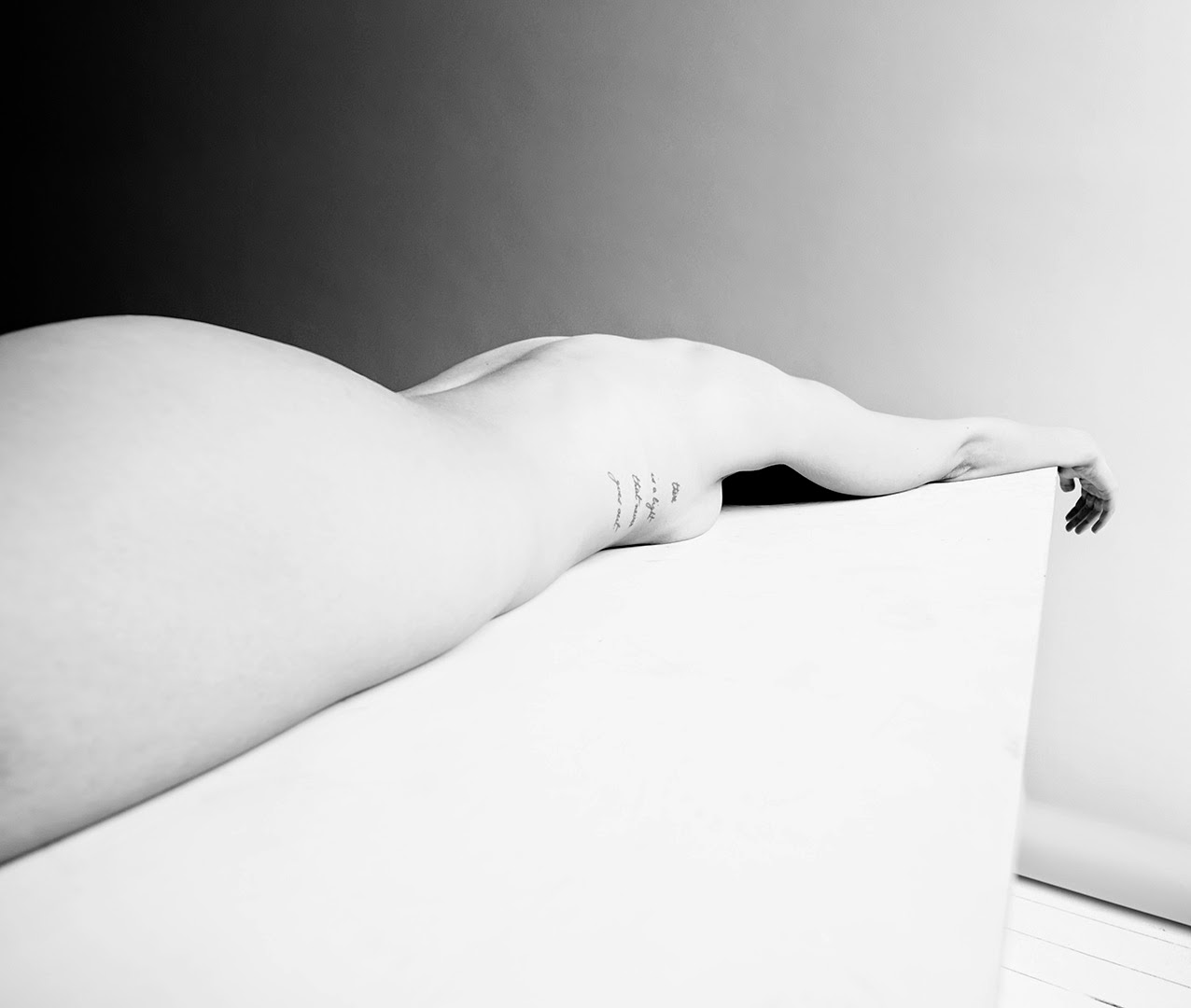
All images (C) Paul Blackmore

“One light source, one subject, one background,” that’s how Paul Blackmore explains his new series “One”. I wrote about this series earlier in the year when it was on at Blackeye Gallery Sydney. Now Melbournians can see it at Edmund Pearce Gallery opening tonight.

Until 25 October

Edmund Pearce

Level 2, Nicholas Building

37 Swanston Street

Melbourne

Chris Round - In Two Places

(C) Chris Round

English photographer Chris Round says the core of his photographic practice lies in "documenting post-natural, human influenced landscapes...these environments are dynamic and exciting because humans continually change their relationship with their surroundings serving up myriad new subject matter".

Round, who is now based in Sydney, held his first show in 2012 and has subsequently won various local and international awards. "In Two Places" he explores "the notion of place in the context of dual citizenship".

Until 1 November

Colour Factory

409-429 Gore Street

Fitzroy

Exhibitions: Los Angeles

Ruth Orkin - Retrospective

(C) American Girl in Italy (Florence), 1951

American photojournalist Ruth Orkin is considered one of the pioneers of the genre. Born in 1922, Orkin was taken with photography from the moment she was given her first camera at the age of 10. In 1939 she cycled across the USA from Los Angeles to New York for the World Fair, taking photographs of her unique “road trip”. In the 1950s she produced a series of photographs for a LIFE feature – Don’t Be Afraid to Travel Alone – a story about women travelling on their on in post-war Europe.

But Orkin is best known for her two bodies of work which became highly acclaimed books - A World Through My Window and More Pictures from My Window – featuring images she shot from the balcony of her New York apartment opposite Central Park, images of the passing parade of life that are now historical records of an era long past.

Refugees, Lydda Airport, Tel Aviv, Israel, 1951

Drunken Women, NYC, 1947

The Card Players, West Village, NYC, 1947

Duncan Miller Gallery in Los Angeles presents the Ruth Orkin Retrospective until 25th October.

Duncan Miller Gallery

2525 Michigan Ave, Unit A7

Santa Monica

Exhibitions: Paris

René Burri - Mouvement

A member of Magnum Photos since 1959, René Burri is known for his portraits of leading figures of the 20th Century including Pablo Picasso, Winston Churchill and Che Guevara. But Burri’s oeuvre is vast. In this new exhibition 100 of Burri’s images, many unpublished, explore “movement” in both black and white and colour. Burri’s work in cinema is also featured with unseen footage from documentaries and films.

All images (C) René Burri

Until 10 December

MEP

5/7 Rue de Fourcy

75 004 Paris

www.mep-fr.org

2014 Foam Talents

(C) Jonny Briggs

With almost 1500 submissions from 71 countries, this year’s Foam Talents jury had its work cut out in choosing the final number of artists named in the 2014 Foam Talents. For the first time 21 photographers were chosen and Photojournalism Now features six this week. To see all the winners and their portfolios visit theFoam site here.

(C) Alice Quaresma

(C) Charles Henry Bedue

(C) Jing Huang

(C) Lucas Foglia

(C) Yoshinori Mizutani

The Foam Talents issue of Foam magazine is out now.

War Photography

Panel Discussion - Sydney

As part of the activities for Don McCullin’s “The Impossible Peace” exhibition, Alison Stieven-Taylor is moderating a panel discussion on war photography with photojournalists Tim Page and Stephen Dupont in Sydney. Held at the Metcalfe Auditorium at the State Library of NSW you can find more details here.

When: Thursday 9th October 6pm

Book Review:

Vlad Sokhin – Crying Meri

If you missed the publication of Alison Stieven-Taylor’s review of Vlad Sokhin's Crying Meri on L'Oeil de la Photographie, you can read it here.

Published by FotoEvidence


Sunday, May 31, 2020

Photography art Gallery Friday Round Up - 29 January, 2016|Photography Art Definition

This week on Friday Round Up -  a photo essay on Tijuana's AIDS crisis, plus three very different exhibitions - PM New York Daily: 1940-48 (New York), Francesa Woodman (Amsterdam) and Martin Parr (Sydney).

Photo Essay & Book:

Tomorrow Is a Long Time

Sergio Borrego, who helps run Tijuana's Albergue Las Memorias HIV/AIDS hospice, puts a net over the face of Pedro Robles, 51, to prevent flies bothering him as he dies of AIDS. Pedro arrived at Las Memorias with full-blown AIDS six days earlier, but because of bureaucratic delays in Tijuana's medical system he received no HIV medication and died without having seen a doctor. Malcolm Linton/Polaris

In Tijuana AIDS afflicts many of the city’s poorest who live along the Tijuana River Canal in slum conditions. Photographer Malcolm Linton and writer Jon Cohen spent two years documenting the impact of HIV/AIDS and their work appears in the book Tomorrow Is a Long Time.

In an interview with Mother Jones, Cohen said, "Our aim was to describe people's lives in enough detail to make you care about them, and these are people who for the most part live in the shadows of communities and are ignored or outright despised".

Linton said when the opportunity to do the book came up he had just retrained as a nurse and was about to give up photography as "the market had gotten so bad...I went to Tijuana (and) began by working as a volunteer nurse there for the UCSD project that was looking at the link between injection and HIV in Tijuana. So I got to know the people living in the canal because I would run the HIV tests on them much of the time. They'd come to the research office, and they'd meet me. Pretty soon I told them that I was also a photographer and that I was interested in doing this project.

"The canal is foul. The ground is covered in used syringes, human excrement, bits of food, rats, and cockroaches. So I bought myself a small folding stool... I'd simply go down there and unfold my stool beside a group of people who were sitting around shooting up. And sit there, for maybe 20 minutes, half an hour, exchange the odd comment, and that was about it. There wasn't a need to say a whole lot. It was as much simply being there, and spending time, that earned me some sort of credibility."

These images are visceral and the story equally difficult to read knowing that with proper medical care many of these people would have a good chance at survival. But as Cohen said that may be the case in wealthy countries; it is the most vulnerable who “slip through the cracks”. And the figures are startling. Less than half the world’s 37 million HIV positive people receive treatment and live in countries where medical care is not readily available. And that's the recorded cases. How many others are under the radar is unknown.

Cohen has been covering the AIDS epidemic since 1990. He said, "I used to visit AIDS wards that had hundreds of people dying from HIV untreated. I never see that anymore. But things improved so dramatically because people the world over made noise about what was going wrong. Tomorrow Is a Long Time is in that same tradition".

To read the full interview visit Mother Jones

Outside her makeshift shelter in a section of the Tijuana River Canal known as El Bordo, Reyna Ortiz holds a heroin syringe in her mouth. Reyna was in one of the highest risk groups for HIV: a female who injected drugs and had regular unprotected sex with a male addict who was also injecting. Malcolm Linton/Polaris

Dr. Patricia González presses on a patient's neck at a Friday first-aid clinic that she began in July 2014 in the Tijuana River Canal. Malcolm Linton/Polaris

Villareal smokes crystal meth one evening in his room at a boardinghouse in downtown Tijuana. Malcolm Linton/Polaris

Transgender sex worker Fernanda Sánchez waits for clients at night on a street in Tijuana's red-light district. Transgender women and gay men have the highest HIV infection rates of any group in Tijuana. Malcolm Linton/Polaris

Exhibitions:

New York - Stephen Kasher Gallery

PM New York Daily: 1940-48

Weegee

First published in June 1940, the richly illustrated PM New York Daily and the Sunday version PM Weekly were vehicles for socially progressive thought. Its mandate was clear - “PM is against people who push other people around. PM accepts no advertising. PM belongs to no political party. PM is absolutely free and uncensored. PM’s sole source of income is its readers — to whom it alone is responsible. PM is one newspaper that can and dares to tell the truth.”

"PM considered photography a foremost instrument for communicating truth as opposed to objectivity, in the same vein as leftist illustrated periodicals from interwar Europe, such as Arbeiten Illustrierte Zeitung, Vu, and Ce Soir. PM declared that photographers are a vital and integral part of the very idea of PM — that they would write stories with photographs, as report­ers wrote them in words."

Despite attracting renowned photographers including Margaret Bourke-White, Ralph Steiner and Weegee, and writers such as Ernest Hemingway, Dorothy Parker and Tip O’Neill, founder Ralph Ingersoll, the former managing editor of Time-Life Publications couldn’t make PM pay. With a mandate to accept no advertising, PM’s loyal readership wasn’t enough to cover costs and in 1948 PM closed its doors.

But its legacy lives on and PM New York Daily: 1940-48 features more than 75 black and white photographs from PM staff and freelancers showing the breadth of coverage that appeared within the pages of this groundbreaking publication.

Bernie Aumuller

Gene Badger

Helen Levitt

Irving Haberman

Margaret Bourke-White

Morris Engel

Weegee

Photographers on show: Weegee, Helen Levitt, Morris Engel, Margaret Bourke-White, Lisette Model, Mary Morris, Irving Haberman, and Arthur Leipzig.

PM New York Daily: 1940-48

Until 20 February

Steven Kasher Gallery

515 W. 26th St.

New York

FOAM - Amsterdam

Francesca Woodman - On Being An Angel

Francesa Woodman Untitled MacDowell Colony Peterborough New Hampshire 1980

(C) George and Betty Woodman

During her short life, American photographer Francesca Woodman (1958-1981) used self-portraiture to explore gender, representation, sexuality and corporality inserting herself as the subject in each image or on occasion using stand-ins. At the age of 22 she committed suicide leaving several hundred silver gelatine prints of which 102 photographs including several large-format diazotype prints and six short videos are on show at Foam. Since her death her work has been exhibited widely and she is said to have inspired artists around the world.

Francesc Woodman Self-portrait talking to Vince Providence Rhode Island 1977

(C) George and Betty Woodman

Francesca Woodman From Space2 providence Rhode Island 1976

(C) George and Betty Woodman

Francesca Woodman Self deceit 1 Rome Italy 1978

(C) George and Betty Woodman

Francesca Woodman Untitled Rome Italy 1977-78

(C) George and Betty Woodman

Until 9 March

Foam Fotografiemuseum

Keizersgracht 609, Amsterdam

Sydney - ACP

Martin Parr - Life’s a Beach

It is fitting that Magnum photographer Martin Parr’s exhibition 'Life’s a Beach' is housed at the Bondi Pavilion Gallery on the shore of one of Australia’s most iconic beaches. Taken over a number of years on beaches around the world from Italy, China, Japan, the US and the UK, 'Life’s a Beach' is Parr at his irreverent best. Loud, kaleidoscopic, banal, bizarre.

Until 27 March

Bondi Pavilion Gallery

Queen Elizabeth Drive

Bondi Beach