Showing posts with label photojournalism. Show all posts

Thursday, July 30, 2020

Photography art Gallery Friday Round Up - 6 June, 2014|Photography Art Definition

This week on Friday Round Up four new exhibitions for Melbourne; more news from the Auckland Festival of Photography; and an interview with Italian photo-artist Valentina Vannicola in the new Q&A section above. Plus Head On Photo Festival closes this weekend in Sydney and Australian high-end photography book publisher T&G Publishing launches Jean-Marc Caimi’s new book Daily Bread in Sweden and Japan.

Also Photojournalism Now is now on Tumblr.  Sign up here to Tumblr and follow Alison Stieven-Taylor's Instagram feeds here or via the links to the right. To receive Photojournalism Now directly to your Inbox fill in your email details on the right.

Exhibition: - Melbourne

Three Shows at Edmund Pearce

Christian Pearson – Industrial Graffiti

Photographer Christian Pearson, who is from Melbourne, says the works that comprise "Industrial Graffiti" aim to convey an “unconscious aesthetic created by labourers, technicians and engineers during the construction of our urban built environment”.

(C) All images Christian Pearson

Defining the concept of ‘industrial graffiti’ Pearson says his images capture what appear as random markings on industrial sites, squiggles, letters, numbers, scrawled in different colours on metal, wood, plastic and over paint.

“The marking is an ephemeral part of a process that ultimately leads to the creation of a new, functional and aesthetic objective,” Pearson states. Like some graffiti, these markings appear defacements when in fact they are codes that guide those erecting our cities. This exhibition is an interesting visual study on a form of communication known to few.

Also on show at Edmund Pearce:

Tim Gresham – Reflect

Shannon McGrath - Fraction

Edmund Pearce

Level 2, Nicholas Building

37 Swanston Street,

Melbourne

Until 28 June

Exhibition: Melbourne

Tom Williams – Portside

(C) Tom Williams

(C) Tom Williams

Often the most powerful photographic stories are those you find in your own backyard. Tom Williams has spent years abroad capturing other cultures and building a career in documentary portraiture. On returning to Australia and the town of Wollongong, (near Sydney) Williams turned his focus on the local population and how the failing industrial economy was impacting residents.

In his exhibition “Portside” are images taken in Port Kembla and Wollongong, both places that have made their mark through the mining and shipping industries. Williams says he found Wollongong a shadow of its former self with those formerly engaged in industrial jobs now joining the ranks of the unemployed.

“The postcard coastline parallels one of the highest youth unemployment rates in Australia,” he says. “As a photographer I’m always asking: what do surfaces say about what’s hidden behind them? What attracts me to making portraits is the brief and intense interaction that results in an image that speaks of the subject, the picture-taker; and sometimes, the place. In the end you can only try to guess at the magnificent complexity and consciousness beneath the outer layer – this is something that keeps us looking at photographs.”

Colour Factory

409-429 Gore Street

Fitzroy

Book Launch:

Jean-Marc Caimi – Daily Bread

I’ll say it upfront. I am biased as I was the editor on this new book by Jean-Marc Caimi “Daily Bread”, and of course I love it. Publisher Gianni Frinzi of T&G Publishing has once again done a brilliant job bringing this book to life. It launched in Sweden last week at Caimi’s exhibition of the same name. You can buy Daily Bread by following the link here.

Daily Bread also launches at the exhibition’s opening in Tokyo at Reminders Photography Stronghold (RPS) on June 14. Caimi is the fourth recipient of the RPS Grant, which he was awarded for Daily Bread.

Launch: Saturday, June 14 at 4:00pm

2-38-5

Higashi-mukojima

Sumida, Tokyo 131-0032

Festival:

Head On Photo Festival

(C) Alison Stieven-Taylor

Head On Photo Festival ends this weekend. Check out the website to see what shows are still on

Showing Now for Head On

Valentina Vannicola's Dante's Inferno - until 8 June

Click on the Feature Articles tab above to read Alison Stieven-Taylor's interview with Valentina about this meticulous and thought-provoking work.

(C) Valentina Vannicola/OnOffPicture

Festival:

Selected Exhibitions – Part Two:

Auckland Festival of Photography

Signature Exhibitions - Alison Stieven-Taylor’s Selection

Last week Photojournalism Now previewed some of the exhibitions on show in the first week of the Auckland Festival of Photography. This week Photojournalism Now takes a look at two exhibitions – one showing now and the other opening 12 June. Both present very different approaches to this year’s Signature Series’ theme -memory. There is also a photo-gallery with images from Rob Gilhooly’s “Suicide Forest” and Emil McAvoy’s “Reflections on Lily Pond”.

Showing Now

Auschwitz Revisited

(C) Bronek Kozka

Melbourne-based photographer Bronek Kozka’s “Auschwitz Revisited” is a contemporary portrait of a landscape that will be remembered in the annals of history as the site of one of the darkest moments of humankind. "Standing in the bitter cold looking to a foggy horizon and seeing what looked like columns, but they were chimneystacks for as far as I could see. One chimney, one hut...the magnitude of the horror dawned on me at this moment. I didn’t want to take any photographs at first...however at some point I decided to shoot. It was here that the most frightening and daunting revelation occurred to me. How close my family was to Auschwitz...how all could have ended here." This is how Kozka describes his experience visiting Auschwitz concentration camp in Poland where he found himself on a personal exploration into his Polish heritage. His black and white images weave his own story with the somberness of the landscape and its open wounds.

(C) Bronek Kozka

Auschwitz Revisited

Bronek Kozka

4-21 June

Elam George Fraser Gallery

University of Auckland

25a Princes Street

Auckland

Opens 12 June

Unruly Memoirs: Nature Fights Back

(C) Jane Zusters

In “Unruly Memoirs: Nature Fights Back” Christchurch-based artist Jane Zusters examines the aftermath of that city’s recent devastating earthquakes in a series of “geopolitical montages”. In this collection of digital images Zusters combines images of external and internal spaces to pose unlikely realms where the ceiling of a library may be blue sky and clouds, or the wall to a bedroom open to the street. These images while somewhat surreal are also situated in reality, reminders of the impermanence of structures and their perceived safety especially when faced by the power of Mother Nature.

(C) Jane Zusters

12-28 June

Sanderson Contemporary Art

122 Jervois Road

Herne Bay

Suicide Forest

Rob Gilhooly

(C) Rob Gilhooly

4-17 June

Hum Salon

123 Grafton Road

Grafton

(Read last week's blog post for the story on this exhibition)

Emil McAvoy

Reflections on Lily Pond

(C) Emil McAvoy

11 June - 21 June

ELAM Projectspace Gallery, Elam School of Fine Arts, The University of Auckland, 20 Whitaker Place

Photoforum: History in The Taking; 40 years (6-28 June)

Gus Fisher Gallery

74 Shortland Street

For details visit Auckland Festival of Photography


Wednesday, July 29, 2020

Photography art Gallery Friday Round Up - 27 June, 2014|Photography Art Definition

This week on Friday Round Up two new books to add to your collection - Stephen Shore's epic From Galilee to the Negev and the Roma's The Waters of Our Time. Plus new exhibitions for Strange Neighbour and Monash Gallery of Art in Melbourne, and Blackeye in Sydney, and a preview to my interview with New York-based Australian photographer Kerry Payne. And a new feature: Picture of the Week.

Picture of the Week:

Despite everything we know about climate change, coal continues to be the "energy of choice" with coal usage reaching a 44 year high in 2013 according to BP's annual Statistical Review of World Energy. While Western democracies point the finger of blame at the developing world, China and India in particular, passing responsibility rather than doing more to clean up their own act, will do nothing to halt the damage being done to the planet. Not to mention the human toll. To see more images from this story visit The Atlantic InFocus.

(C) Channi Anand - Jammu, India 2012

Book:

Stephen Shore - From Galilee to the Negev

“interpretations depend very much on who the interpreter is, who he or she is addressing, what his or her purpose is, at what historical moment the interpretation takes place” Edward W. Said

In Stephen Shore’s epic book ‘From Galilee to the Negev’ there is a distinct sense of Shore’s intent and focus from the first pages on this expansive book, which comes with its own map and designated “sites of interest” and “photographed locations”.

Shore’s capacity to pursue a story that took him 17 years to complete, is one of the hallmarks that have made him a master storyteller. Shore, who took to the road in the seventies with camera in hand and hasn’t looked back, is considered one of the pioneers in documentary colour photography. Cited as an influence by many – Nan Goldin, Andreas Gursky and Wolfgang Tillmans amongst others – Shore was the first living photographer to be given a solo exhibition at the Metropolitan Museum of Art in New York in 1971; prior to Shore the last artist was Alfred Stieglitz in 1931.

Situated within ten dedicated chapters – Ashqelon, Galilee, Tel Hazor, Tel Aviv, Gaza, Jerusalem, Ramallah, Hebron, Negev and Sacred Stones - Shore’s idiosyncratic photographs stitch together the desert landscape, the passing of time, the rise of the modern and portraits of local residents to create a visual tapestry that is unique to Israel, and to Shore. ‘From Galilee to the Negev’ is Shore’s interpretation of this part of the world, and little has slipped his astute gaze.

Tel Aviv, March 23, 2011

Large crater, Negev Desert, September 29, 2009

In the urban city of Tel Aviv, Shore captures cosmopolitan Israel in the bustling streets, busy cafes and growing number of high rises dotting the skyline. In the Negev the desert’s arid moonscapes and isolation draw the reader’s eye and in Jerusalem his portraits of local residents give context to daily life in this ancient holy city.

Shore says with this book it is his intention to tell a story about Israel that isn’t loaded with the stereotypes of “suffering and heroism, of victims and perpetrators”, labels often associated with this part of the world.

Tel Aviv, June 17, 2010

Jerusalem, September 23, 2009

Ramallah, October 3, 2009

In "From Galilee to the Negev" each chapter leads with an essay that addresses one particular image. Written by leading artists, writers and academics the essays add another layer to this complex work. To give a flavour of the writing, the chapter ‘Galilee’ features the New Yorker’s Jane Kramer in response to Shore’s image ‘Sderot’ taken in September, 2009. This photograph comprises a map, a man’s hand pointing and his shadow cast across part of the image. Kramer writes: “The map in Stephen Shore’s photograph is, as maps go, neutral, something a pilot might use to get his bearings, benignly distant from the problems of the ground. Its divisions are faint, vague, even reassuring – thin red lines that in reality, have been drawn and redrawn, in the course of three wars, with the blood of thousands of young Arabs and Israeli soldiers”.

This is a book that takes time, you can’t rush through it if you have any intention of understanding it. Give the essayists their due and read their words, ingest the images, listen to others’ thoughts and allow your imagination to run free. Leave behind the snippets of history that dwell in memory and make you think you know Israel. Take Shore’s journey of discovery, meet the people, walk across the pebbled roadways, wipe the grit of sand from your face, and jostle for position at the local market. These are the joys of photography, allowing your imagination to drop you into a photograph to wonder.

From Galilee to the Negev, Stephen Shore £75 / €85 Phaidon 2014

Phaidon

Book:

The Waters of Our Time

Thomas and Giancarlo T. Roma

There is something quite seductive about The Waters of Our Time and its fictitious narrator, a woman who has lived all her life in Brooklyn. As she shares her intimate story, the words meld with the photographs of Thomas Roma, a master photographer, who has spent much of the past forty years photographing Brooklyn his hometown.

(C) All images Thomas Roma - From The Waters of Our Time published by powerHouse Books

This is the second time Thomas and his son, Giancarlo T. Roma, have collaborated. In The Waters of Our Time Giancarlo pens what is at times truly lyrical verse that sings to his father’s photographs, which he has used as a visual storyboard on which to build his narrative.

"The Waters of Our Time" is a story of love, memories and the passing of time. And it is also a story about the relationship between a man and his father. I haven’t seen the hardcopy of this book, but if the PDF is any indication, it’s worth spending sometime in the Roma’s Brooklyn. Available from powerHouse Books New York

Exhibition: Melbourne

A Window that isn't there - Group Show

(C) Daniela Gullotta

This exhibition is based on the premise that there is a "tug of war between what we see with our eyes and what we see with our internal memories and visions". Works include photographs as well as multi-media. Exhibiting artists - Daniela Gullotta, Norian Paicu, Amelie Scalercio, Luhsun Tan, Michael Vale and Philippe Vranjes. Curated by Michael Vale.

Strange Neighbour

11 July - 2 August

395 Gore Street

Fitzroy

Exhibition: Melbourne

Rod McNicol - Memento Mori

Monash Gallery of Art (MGA) is currently showing a series of portraits from Australian photographer Rod McNicol. One of the Prahran College of the Arts alumni in the 1970s, McNicol has won numerous prizes for his portraiture work which is held in major institutional collections including the Bibliotheque Nationale (Paris), Art Gallery of New South Wales, National Gallery of Australia, National Gallery of Victoria, National Library (Canberra), and MGA.

In this exhibition there are a number of dual portraits of the same person taken years apart, as shown here. McNicol has clearly had a particular vision for this series, which he's carried through the years. Hanging together the images tell a story of the passing of time, and hint at the journey of the individual pictured. There are also solitary portraits, but these duo are in my opinion the strongest of the work on show.

(C) All images Rod McNicol

Until 31 August

Monash Gallery of Art

860 Ferntree Gully Road

Wheelers Hill

Exhibition: Sydney

Eden Diebel - Germinate

(C) Eden Diebel - Germinate

Blackeye Gallery

3/138 Darlinghurst Road

Darlinghurst (Sydney)

Until 13 July

Artist's Talk Saturday 28th June at 3pm

Coming Soon:

Interview with Kerry Payne

(C) Kerry Payne from Left Behind

Next week I am interviewing Australian photographer Kerry Payne who is now based in New York, but I wanted to share a couple of her images this week to hopefully whet your appetite. Sometimes you see work and are just blown away by it and that was my immediate reaction to Payne's photography. Deeply emotional and at times painful to view, Payne intimately explores issues around subjects that are largely still taboo in the modern world such as mental health and fertility. This is brave, courageous and infinitely important work.


Photography art Gallery Friday Round Up - 13 June, 2014|Photography Art Definition

This week Friday Round Up features an historical theme. There are stories on two iconic American photographers who began their careers in the 1960s - Mary Ellen Mark and Danny Lyon, plus The Sievers Project (Melbourne), and a look at two massive photography archives that are now available online - the Metropolitan Museum of Art in New York and The Open Society Foundations. A visual feast.

Interview

Mary Ellen Mark

(C) Mary Ellen Mark

American photographer Mary Ellen Mark has been taking pictures for more than 50 years. In May the Stills Gallery in Sydney hosted her first solo exhibition in Australia featuring a number of images from the eighties and nineties including some shot for National Geographic in 1987 for a story on Australian Immigrants.

More recently she’s worked in Australia as a stills photographer on three of Baz Luhrmann’s films – ‘The Great Gatsby’ and ‘Moulin Rouge’ in Sydney, and ‘Australia’ in the remote town of Kununurra in Western Australia, 3,040 kilometres (1,889 miles) from Perth. I can tell by the way Mark pronounces” Kun-un-urra” that she is still savouring that quintessential Australian outback experience. Of her time with Baz and his multi-Oscar winning wife Catherine ‘CM’ Martin she says, “Great people, brilliant”.

Internationally Mark is equally renowned for her film stills as well her documentary photography and she’s managed to successfully live in both worlds without losing her visual signature. She is credited with shooting more than 50 films including ‘Tootsie,’ ‘One Flew over the Cuckoo’s Nest,’ ‘Apocalypse Now’ and Fellini’s ‘Satyricon’. Mark tells me these commissions, and her magazine work, have funded her personal projects, which lie at the heart of her photographic practice...(to read the full interview and see more photographs please click on the Feature Articles tab at the top of the blog).

Book:

Danny Lyon - The Seventh Dog

“The Seventh Dog” is the first retrospective monograph from American documentary photographer Danny Lyon. This book is as much a visual diary as it is a personal recollection, with images and anecdotes interwoven throughout in an intimate portrayal of what Lyon has seen over the last fifty years.

And it’s also a rollicking good read that is moved along by Lyon’s humour and his frankness. Unafraid of controversy, and throwing caution to the wind, Lyon plunged headlong into life using his camera to try and make sense of what was around him. Photography may be a lonely pursuit, as Robert Frank said, but the gems that live within the pages of The Seventh Dog could not have been taken without a single-minded focus...(to read full review and see more photographs please click on the Book Reviews tab at the top of the blog).

Exhibition: Melbourne

The Sievers Project - Group Show

Gerard Hearbst (C) Wolfgang Sievers

Considered one of the world's great industrial and architectural photographers, Wolfgang Sievers (1913-2007), a student of Bauhaus, fled Nazi Germany for Australia at the outbreak of WWII. In 1939 he opened his photographic studio in Melbourne and became one of Australia’s most renowned photographers with many of his images icons of the industrial age in this country.

Since his death in 2007, Naomi Cass the director of Melbourne’s Centre for Contemporary Photography (CCP) has pondered how to combine contemporary practice with Sievers own work,the outcome of which is "The Sievers Project" in which six “early career” photo-media artists have responded to Sievers’ photographs in both direct and more esoteric styles.

The Sievers Project artists - Jane Brown, Cameron Clarke, Zoe Croggon, Therese Keogh, Phuong Ngo, and Meredith Turnbull – were given an open brief says Kyla McFarlane, Assistant Curator at CCP, who was also heavily involved in the Project. “The only remit was to respond to his work or his life or his philosophy…All responded quite respectfully, and have taken quite an interesting lateral and sometimes more direct responsive approaches”.

McFarlane says Clarke and Brown focused on some of Sievers more commercial images. Both visited various sites that Sievers had photographed including the Ford Factory and AMCOR’s Australian Paper Mills in Melbourne. Brown also visited “an old mining site in Broken Hill, which is a graveyard for machinery. There’s a certain poetic melancholy to these images. Jane prints her own work and uses interesting tones including gold. The prints are arranged in grids so you can see this mass of machinery and the abandoned nature of the place. We’ve hung Jane’s work opposite Sievers’ images and there is a real conversation between the pair”.

(C) Jane Brown

(C) Jane Brown

(C) Cameron Clarke

(C) Cameron Clarke

At a textiles plant in the Victorian country town of Wangaratta Clarke took a different approach with his response. With his idea being to capture the “theatrical drama of Sievers work, Cameron has taken portraits of the machines and the individuals,” offers McFarlane. “The workers in these photographs look so human and almost sweaty against these machines that are still in operation”.

Photo-media artist Zoe Croggon has taken Sievers’ photographs and used them underneath her collage works that are printed on aluminium. Suspended from the ceiling on wires, these two images overlap and juxtapose the athleticism of the human form against cold steel.

(C) Zoe Groggon

Phuong Ngo drew on his migrant heritage to tell a personal story about his mother and other Vietnamese women who worked as seamstresses in backyard workshops. Using the sewing machine as the lynchpin, his portraits explore the relationship between the machines and the women. McFarlane says this work is a personal homage to Ngo’s childhood. “Phuong said that when he was growing up the sewing machine’s sound was like a Vietnamese lullaby…so here he’s taken a nub of Sievers’ work and placed it within his own history”.

(C) Phuong Ngo

In addition to the more traditional photographic representations are works that feature fabric, sculpture, collage and photolithographs. Using photography and original sculpture, artist Therese Keogh chose a photograph Sievers took in Rome of The Forum on which to frame her response. McFarlane says Keogh’s approach is centred on what she’s defined as “anomalies in Sievers’ practice”. Another installation artist and designer Meredith Turnbull, has used Sievers’ portrait of designer Gerard Hearbst as inspiration. Hearbst was an immigrant like Sievers. In this portrait Hearbst is pictured waving a bolt of fabric like a flag. It is this image that Turnbull has collaged and printed onto fabric as her response to a master’s work.

(C) Therese Keogh

(C) Meredith Turnbull

The Sievers Project

Until 24 August

CCP

404 George Street

Fitzroy (Melbourne)

Open Archives:

Metropolitan Museum of Art

(C) Edward Steichen 1904

(C) Alfred Steiglitz 1905

(C) Martin Munkacsi 1929

The Metropolitan Museum of Art in New York has opened its archive of around 30,000 photographs for free for non-commercial use. Images date back to the early years of photography with an eclectic collection of works that provide a brilliant walk through photography's history in the US in particular. This is a goldmine for anyone interested in the photograph's journey from Daguerre to now.

(C) Leon Levinstein 1960

(C) Robert Howlett 1857

(C) Rudolph Eichemeyer 1901

Open Society Foundations Archive

TheOpen Society Foundations has also opened its archive of documentary photographs to the public. Spanning 15 years, this collection features works by more than 170 photographers. There are both renowned and lesser known photographers in the Collection with the emphasis on the work - bodies of work that address human rights abuses and investigate the human condition in times of conflict.

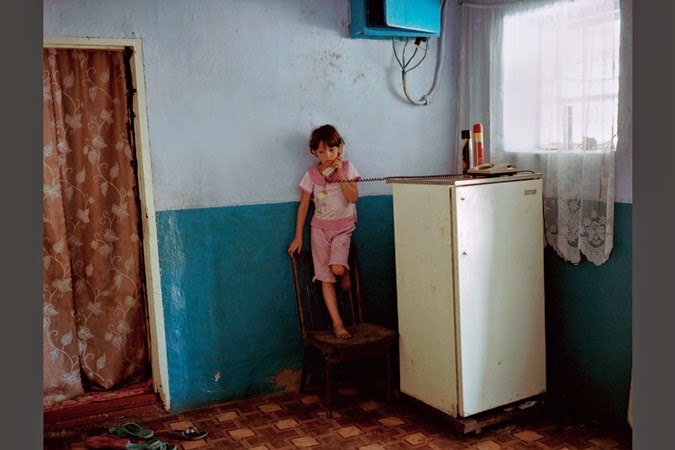
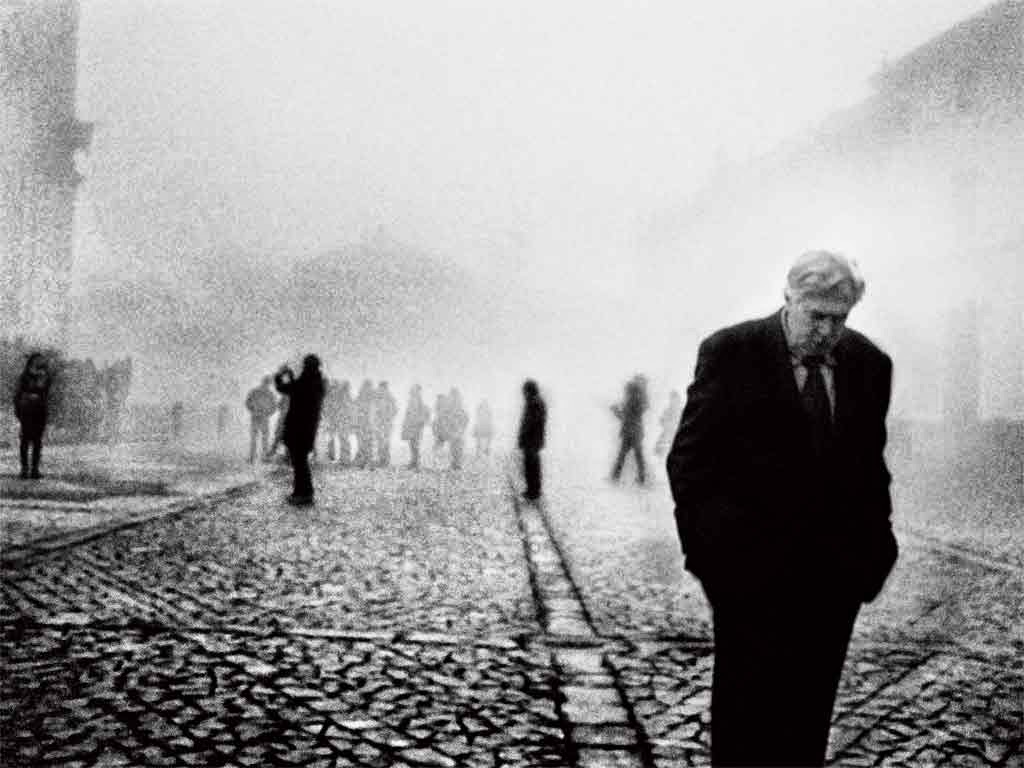
This is a fantastic research archive with images from many including "Antonin Kratochvil’s documentation of the nascent years of Eastern Europe’s transition from Communism; Andrew Lichtenstein’s examination of the criminal justice system in the United States; Saiful Huq Omi’s representation of the Muslim ethnic minority Rohingya living in western Burma; and Andrea Diefenbach’s photographs of Moldovan parents who have migrated to Italy to find better-paying work, and the children they’ve left behind".

.

(C) Andrew Lichtenstein

(C) Antonin Kratochvil

(C) Saiful Huq Omi

(C) Andrea Diefenbach