This week on Friday Round Up Visa pour l'Image Part Two features Alison Stieven-Taylor's interview with photographer Samuel Bollendorf who has curated the exhibition "Amateurs Make the Front Page: 30 Pictures that have not changed Photojournalism"; Vlad Sokhin launches his new book "Crying Meri" today at the Visa Bookshop, and the winners of the Visa Awards. Plus today Getty Images announces its 2014 Getty Grant winners.

Part Two
Photo Shanghai: Interview
Also this week a feature interview with the Fair Director of the inaugural Photo Shanghai which opens today. Click on the Feature Interviews tab at the top of the blog to read the story or here.

(C) Herb Ritts, Madonna IV, San Pedro, 1990. Coutesy CAMERA WORK, Berlin and Herb Ritts Foundation
Visa pour l'Image - Interview:
Samuel Bollendorf
"Amateurs Make the Front Page: 30 Pictures that have not changed Photojournalism"

Abu Ghraib
This year in answer to continuing concerns that amateur photographers are taking the place of professionals, French photojournalist Samuel Bollendorf has curated a special exhibition for Visa pour l’Image; “Amateurs Make the Front Page: 30 Pictures that have not changed Photojournalism,” demonstrating the small number of “front page” images that have been taken by amateurs.
“I felt it was important to consider the whole issue of amateur news photography and whether it was really a problem for the profession or just an evolution of the technology and the way people are using the pictures. Thirty front pages in twenty years is not the end of a profession,” he says refuting the idea that amateurs are in competition with the professional photojournalist.”
In putting together the exhibition Bollendorf worked with sociologist André Gunthert who specialises in visual culture and the way people are using and consuming pictures. He also consulted various newspaper picture editors and searched agency archives.

Tsunami
When Bollendorf describes these images as “front page pictures” he is referring to their news value. Included in the exhibition are those taken by American soldiers depicting the torture and abuse of prisoners in Abu Ghraib prison in Iraq. There are also the photographs from the Boxing Day tsunami in 2004, and the London bombings in 2005, spot news photographs where often the person taking the picture has been directly caught up in the event.
Bollendorf says these rumblings in the industry are not new and in fact the concerns of professionals about amateurs moving into their territory stem back to 1893 when an article claimed there to be “an army of photographers running rampant around the globe”.
“Photography is an industry of revolution,” says Bollendorf. “The last one was a century ago, when photographers using glass plates claimed the new cameras that used rolls of celluloid film were for amateurs. They said it was not really photography. You know the people who were using those new cameras were people like Gisèle Freund and Henri Cartier-Bresson.” We both laugh hard at that information, as the correlation to what’s happening today is obvious.
He says the mythology of the photo reporter as the first to show an event to the world has ended as it is unlikely that the photojournalist will be first on a scene, but that doesn’t mean that professionals are no longer needed. “There will always be a first viewer and they will take the first picture and post it to the social network and show it to the world, but it is just a document, it is not reportage. Before the digital camera there was already a first viewer, and it was not a problem for the journalist to take this account and then check the facts and write the article. Today it is exactly the same thing. The first witness shoots a picture, but it is only a document. So we are working the same way, but with new tools only”.
We agree that the real problem is not the amateur pictures, but the media crisis that has resulted in traditional media platforms no longer investing in commissioning or producing photographic inquiry. Bollendorf speaks of these shifts not only from the perspective of the individual photojournalist, but also as the founder, and former chair, of the collective L’Oeil Public, which operated for a decade before closing in 2010.
“I still work with press, but the main difference is that ten years ago the press was producing maybe 90 per cent of my projects and today they are not producing any of my personal projects. I have to fund them in a different way, with a TV channel or with a website or a foundation or grants. I spend nine days behind the computer creating networks and trying to get funding and one day filming! But all my projects are shown on a press website or in a publication, so the press is consuming my projects.”
The transition is just part of the evolution of the medium for Bollendorf who has always been an early adopter. In 2008 he created one of the first interactive web documentaries, “Journey to the End of Coal”. Published by Le Monde, this documentary received more than 200,000 views and was regarded as being at the cutting edge.
“That was six years ago, or a century for the digital era,” he laughs. “What we will be facing in five or ten years, who knows. I think the more important thing is trying to stay aware of all the evolutions. Not only technologic innovation, that’s just a tool. But understanding the way people are using or receiving the media, and pictures on these new audio-visual devices. Photographers still have a future for sure, but I think the only way we will be able to step to this new era is to adapt and find new forms of production and new ways of showing our work to the public.”
Visa pour l'Image Book Launch:
Vlad Sokhin Crying Meri

Today (Friday) at the Visa bookshop Vlad Sokhin will officially launch his book "Crying Meri" published by FotoEvidence. This book is the culmination of three years work by Sokhin on the epidemic of domestic violence and sexual assault on the women of Papua New Guinea, which is located to the of Australia in Oceania. Look out for Alison Stieven-Taylor's interview with Sokhin about this work coming soon on L'Oeil de la Photographie.


All images (C) Vlad Sokhin
And the Winners are:
2014 Getty Grants Announced Today
It’s been ten years since the inception of the Getty Images Grant programme. During this time Getty has awarded $1.2 million in total to photojournalists and photographic communities around the globe. Today (Friday) at Visa pour l’Image, Getty announced the winners of the 2014 Grants chosen from 575 entries across 89 countries.
In announcing the winners Jonathan Klein, the company’s Co-founder and CEO said: “Imagery is the unrivalled language of our time and Getty Images is deeply committed to supporting the vision and passions of emerging and established photographers and other artists. Our global grants programme has spanned a decade and is the largest in the industry, yet each year’s entrants never fail to produce work that both inspires and profoundly moves us. I am extremely proud of the programme and offer my congratulations to our 2014 honourees and to the 80 outstanding recipients over the past 10 years. Getty Images is proud to help you bring important and powerful stories into light”.
Winners:
Grants for Editorial Photography
Five photojournalists each receive a grant of US$10,000 as well as collaborative editorial support from Getty for projects of personal and journalistic significance.
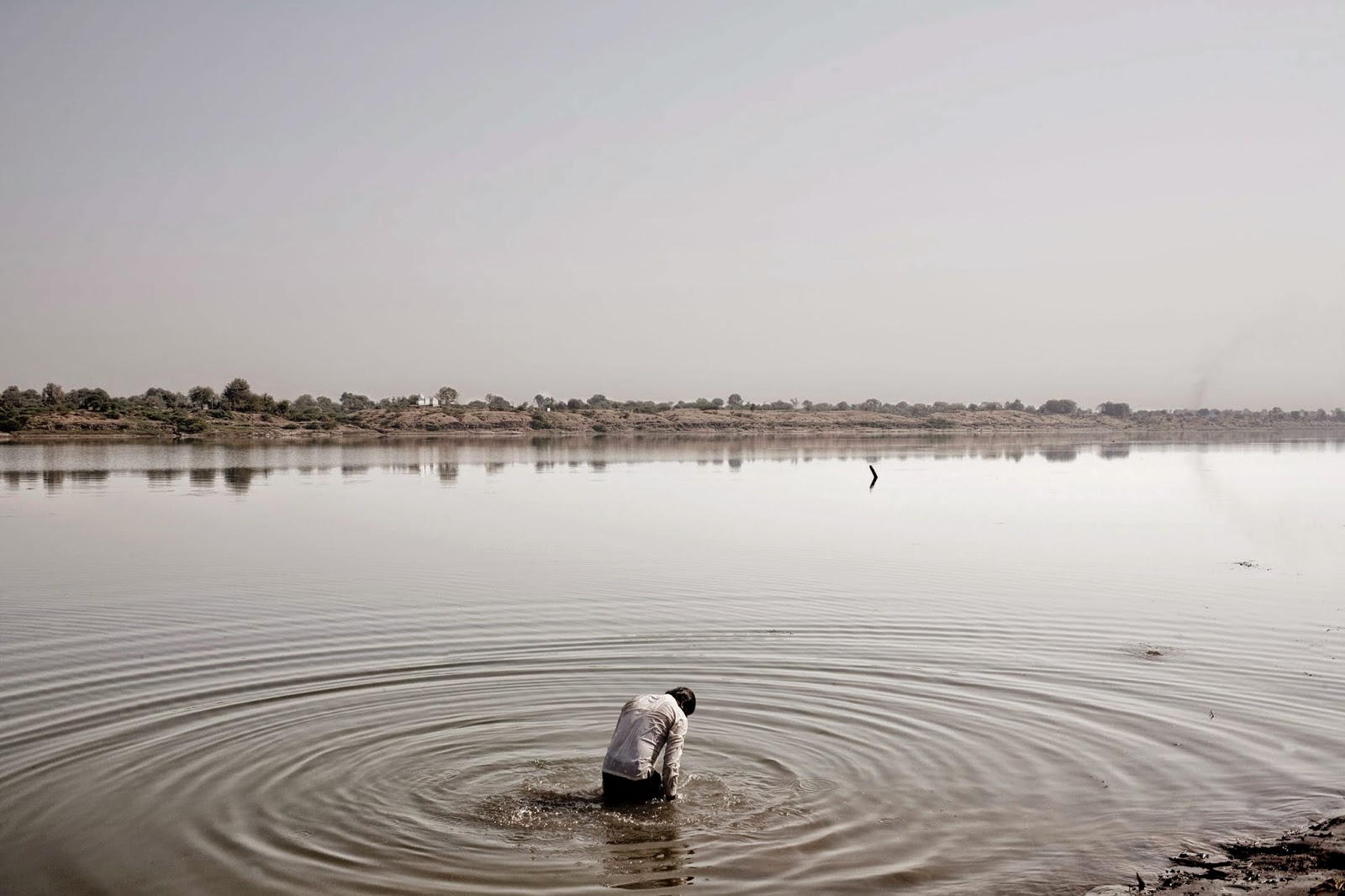
Giulio di Sturco, a Reportage by Getty Images’ featured contributor, receives an award for his body of work titled Ganges: Death of a River, which documents the demise of the Ganges River in India and examines its impact on the livelihoods of millions of people who live along its banks.


Above images (C) Giulio di Sturco
Juan Arredondo for Born in Conflict, which examines the effects of a 50-year conflict on the youth of Colombia and documents the experiences of current and former child soldiers.


All images (C) Juan Arredondo
Jordi Busqué’s award-winning portfolio, The Mennonites of Bolivia, documents the lives of the Mennonites, a relatively unknown religious community of European decent, in Eastern-Bolivia. As the 21st century brings modernity almost everywhere, the Mennonite way of life has remained unchanged since the 16th Century.


All images (C) Jordi Busqué
Krisanne Johnson, also a Getty Images’ grant recipient in 2009, has been awarded a grant for her work titled: South Africa's Post-Apartheid Youth. Twenty years after the beginning of a multiracial democracy in South Africa, Krisanne’s project follows the lives of South African youth, documenting the intimacies of daily life.


All images (C) Krisanne Johnson
French photojournalist, William Daniels, has been awarded for his CAR in Chaos body of work, which examines an unprecedented year of violence in the Central African Republic, which began in March 2013 when rebel coalition, Séléka seized power. Daniels is also this year's winner of the ICRC Humanitarian Visa d’or award 2014 for his work in CAR.


All images (C) William Daniels
Getty Images Special Grant
Laura Boushnak receives a special grant, in celebration of Getty Images’ partnership with Lean In, for her work titled I Read I Write, which explores the education of women in the Middle East. Collectively, Arab countries have the highest rate of female illiteracy in the world, which this project aims to address by focusing on highly-educated women who contend with limitations on the range of professions they are allowed to practice.


All images (C) Laura Boushnak
2014 Recipients of Getty Images Creative Grants:
Getty Images Creative Grants are designed to support non-profits, which do not currently have the resource to employ photographers and filmmakers to help further their mission. The following three teams, consisting of a photographer and communications professional, have each received US$20,000 to create compelling new imagery to strengthen the communications of a selected non-profit.
Robin Hammond for his project titled Love in a Time of Persecution, in collaboration with Bring Me Joy and The International Gay and Lesbian Human Rights Commission.


All Images (C) Robin Hammond
Photographers Susan Carlonza Chanin and Rana Faure, and filmmaker Poppy de Villeneuve, in partnership with the Project Buchanan agency and not-for-profit RAINN, to produce and create a short film which highlights the widespread nature of child abuse, rape and sexual violence.


All images (C) Susan Carlonza Chanin
Joshua Kristal, in collaboration with The Inspired Storyteller Collective and Girls Gotta Run, a non-profit organisation for their proposal Girls Gotta Run: Racing towards Empowerment.


All images (C) Joshua Kristal
To find out more about the Getty Grants and to read more on each of the winners' projects please visit the website here.
Visa Awards - 2014 Rémi Ochlik Award
Winner of this year's Prix de la Ville de Perpignan Rémi Ochlik Award is Ukrainian photographer Maxim Dondyuk. As part of the prize Dondyuk's work is exhibited this week in Perpignan. Earlier this year we featured Dondyuk's intense photo essay on the TB epidemic plaguing Ukraine on Friday Round Up (7 March 2014).

(C) Maxim Dondyuk
Canon Female Photojournalist Award supported by Elle Magazine
French photographer Viviane Dalles has been named this year's winner of the Canon Female Photojournalist Award from a pool of over 90 applicants from 26 countries. The competition, which is sponsored by ELLE magazine, carries an 8,000€ prize that Dalles will use to complete her project on teen pregnancy in northern France.
Dalles says, “The project I will realise with the Canon award is about the teen mothers in the North of France. They are born in one of the regions most affected by unemployment: La Thierache. However, their future is already planned: they are only just teenagers and they dream to become mothers as soon as possible. I will begin this photo essay in September [2014].” Viviane will receive her award during the professional week at Visa pour l’Image.


