Showing posts with label fine art photography. Show all posts

Thursday, July 30, 2020

Photography art Gallery Friday Round Up - 6 June, 2014|Photography Art Definition

This week on Friday Round Up four new exhibitions for Melbourne; more news from the Auckland Festival of Photography; and an interview with Italian photo-artist Valentina Vannicola in the new Q&A section above. Plus Head On Photo Festival closes this weekend in Sydney and Australian high-end photography book publisher T&G Publishing launches Jean-Marc Caimi’s new book Daily Bread in Sweden and Japan.

Also Photojournalism Now is now on Tumblr.  Sign up here to Tumblr and follow Alison Stieven-Taylor's Instagram feeds here or via the links to the right. To receive Photojournalism Now directly to your Inbox fill in your email details on the right.

Exhibition: - Melbourne

Three Shows at Edmund Pearce

Christian Pearson – Industrial Graffiti

Photographer Christian Pearson, who is from Melbourne, says the works that comprise "Industrial Graffiti" aim to convey an “unconscious aesthetic created by labourers, technicians and engineers during the construction of our urban built environment”.

(C) All images Christian Pearson

Defining the concept of ‘industrial graffiti’ Pearson says his images capture what appear as random markings on industrial sites, squiggles, letters, numbers, scrawled in different colours on metal, wood, plastic and over paint.

“The marking is an ephemeral part of a process that ultimately leads to the creation of a new, functional and aesthetic objective,” Pearson states. Like some graffiti, these markings appear defacements when in fact they are codes that guide those erecting our cities. This exhibition is an interesting visual study on a form of communication known to few.

Also on show at Edmund Pearce:

Tim Gresham – Reflect

Shannon McGrath - Fraction

Edmund Pearce

Level 2, Nicholas Building

37 Swanston Street,

Melbourne

Until 28 June

Exhibition: Melbourne

Tom Williams – Portside

(C) Tom Williams

(C) Tom Williams

Often the most powerful photographic stories are those you find in your own backyard. Tom Williams has spent years abroad capturing other cultures and building a career in documentary portraiture. On returning to Australia and the town of Wollongong, (near Sydney) Williams turned his focus on the local population and how the failing industrial economy was impacting residents.

In his exhibition “Portside” are images taken in Port Kembla and Wollongong, both places that have made their mark through the mining and shipping industries. Williams says he found Wollongong a shadow of its former self with those formerly engaged in industrial jobs now joining the ranks of the unemployed.

“The postcard coastline parallels one of the highest youth unemployment rates in Australia,” he says. “As a photographer I’m always asking: what do surfaces say about what’s hidden behind them? What attracts me to making portraits is the brief and intense interaction that results in an image that speaks of the subject, the picture-taker; and sometimes, the place. In the end you can only try to guess at the magnificent complexity and consciousness beneath the outer layer – this is something that keeps us looking at photographs.”

Colour Factory

409-429 Gore Street

Fitzroy

Book Launch:

Jean-Marc Caimi – Daily Bread

I’ll say it upfront. I am biased as I was the editor on this new book by Jean-Marc Caimi “Daily Bread”, and of course I love it. Publisher Gianni Frinzi of T&G Publishing has once again done a brilliant job bringing this book to life. It launched in Sweden last week at Caimi’s exhibition of the same name. You can buy Daily Bread by following the link here.

Daily Bread also launches at the exhibition’s opening in Tokyo at Reminders Photography Stronghold (RPS) on June 14. Caimi is the fourth recipient of the RPS Grant, which he was awarded for Daily Bread.

Launch: Saturday, June 14 at 4:00pm

2-38-5

Higashi-mukojima

Sumida, Tokyo 131-0032

Festival:

Head On Photo Festival

(C) Alison Stieven-Taylor

Head On Photo Festival ends this weekend. Check out the website to see what shows are still on

Showing Now for Head On

Valentina Vannicola's Dante's Inferno - until 8 June

Click on the Feature Articles tab above to read Alison Stieven-Taylor's interview with Valentina about this meticulous and thought-provoking work.

(C) Valentina Vannicola/OnOffPicture

Festival:

Selected Exhibitions – Part Two:

Auckland Festival of Photography

Signature Exhibitions - Alison Stieven-Taylor’s Selection

Last week Photojournalism Now previewed some of the exhibitions on show in the first week of the Auckland Festival of Photography. This week Photojournalism Now takes a look at two exhibitions – one showing now and the other opening 12 June. Both present very different approaches to this year’s Signature Series’ theme -memory. There is also a photo-gallery with images from Rob Gilhooly’s “Suicide Forest” and Emil McAvoy’s “Reflections on Lily Pond”.

Showing Now

Auschwitz Revisited

(C) Bronek Kozka

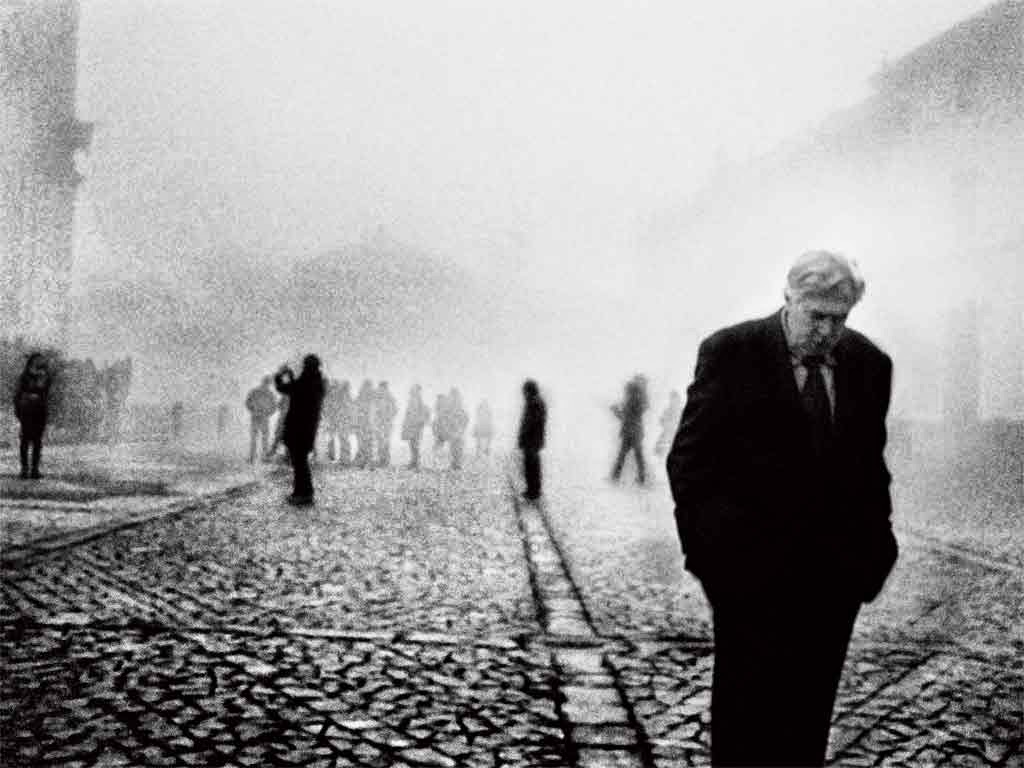
Melbourne-based photographer Bronek Kozka’s “Auschwitz Revisited” is a contemporary portrait of a landscape that will be remembered in the annals of history as the site of one of the darkest moments of humankind. "Standing in the bitter cold looking to a foggy horizon and seeing what looked like columns, but they were chimneystacks for as far as I could see. One chimney, one hut...the magnitude of the horror dawned on me at this moment. I didn’t want to take any photographs at first...however at some point I decided to shoot. It was here that the most frightening and daunting revelation occurred to me. How close my family was to Auschwitz...how all could have ended here." This is how Kozka describes his experience visiting Auschwitz concentration camp in Poland where he found himself on a personal exploration into his Polish heritage. His black and white images weave his own story with the somberness of the landscape and its open wounds.

(C) Bronek Kozka

Auschwitz Revisited

Bronek Kozka

4-21 June

Elam George Fraser Gallery

University of Auckland

25a Princes Street

Auckland

Opens 12 June

Unruly Memoirs: Nature Fights Back

(C) Jane Zusters

In “Unruly Memoirs: Nature Fights Back” Christchurch-based artist Jane Zusters examines the aftermath of that city’s recent devastating earthquakes in a series of “geopolitical montages”. In this collection of digital images Zusters combines images of external and internal spaces to pose unlikely realms where the ceiling of a library may be blue sky and clouds, or the wall to a bedroom open to the street. These images while somewhat surreal are also situated in reality, reminders of the impermanence of structures and their perceived safety especially when faced by the power of Mother Nature.

(C) Jane Zusters

12-28 June

Sanderson Contemporary Art

122 Jervois Road

Herne Bay

Suicide Forest

Rob Gilhooly

(C) Rob Gilhooly

4-17 June

Hum Salon

123 Grafton Road

Grafton

(Read last week's blog post for the story on this exhibition)

Emil McAvoy

Reflections on Lily Pond

(C) Emil McAvoy

11 June - 21 June

ELAM Projectspace Gallery, Elam School of Fine Arts, The University of Auckland, 20 Whitaker Place

Photoforum: History in The Taking; 40 years (6-28 June)

Gus Fisher Gallery

74 Shortland Street

For details visit Auckland Festival of Photography


Monday, July 27, 2020

Photography art Gallery Friday Round Up - 11 July, 2014|Photography Art Definition

This week on Friday Round Up an extended interview with Roger Ballen, former UN photographer Martine Perret's new book, Gregg Segal's garbage portraits and Picture of the Week.

Picture of the Week:

Sri Lankan fish vendor(C) Ishara S. Kodikara

Interview:

Roger Ballen - Asylum of the Birds

“There are infinite possibilities to follow; that is what makes photography so difficult, there is no limit to the possibilities” Roger Ballen

When ‘Asylum of the Birds’ was released I was eager to review this latest offering from American photographic artist Roger Ballen, who in my view is one of the most boundary-pushing image-makers practicing today. A native New Yorker, Ballen has lived in Johannesburg, South Africa for 15 years. ‘Asylum of the Birds’ builds on his earlier bodies of work that are set in and around the same residence; Boarding House (2009) and Shadow Chamber (2005).

Born into what could be considered New York’s high court of photography – his mother worked at Magnum in the sixties and opened one of the first photographic art galleries in the United States with André Kertész and Henri Cartier-Bresson - Ballen was exposed to photography and photographers at an early age. Yet as a youth his passion was drawing and painting, photography would come later and when it did it would become the heartbeat of his artistic self.

While photography has been at the core of his practice for decades, it wasn’t until Ballen was in his fifties that he left behind his professional life as a geologist and plunged headlong into his art. The bold move paid off and collectors, institutions and galleries worldwide now seek his work, eager for a glimpse into Ballen’s world, for it is wholly his aesthetic.

“My photographs are meant to straddle the strange vague line where illusion become delusion, fact is fiction and the conscious merges with the unconscious,” he says.

‘Asylum of the Birds’ is not an easy work. You can’t flick through this book and scan images. These images demand you stop and not just glance, but take time to look at the story as it unfolds before you. Birds, rats, frogs, dogs and human beings are props in Ballen’s works, elements that come together with the sketches, costumes, masks, drawings, paintings and broken furniture, all found objects that Ballen mixes in his photographic cauldron. In Ballen’s hands these separate pieces form synergies in scenes that defy explanation. And that is exactly his intention.

“My best photographs are the ones that I do not understand,” says Ballen. “These photographs (in Asylum) comment on various aspects of the human condition…my condition. I am not able to be precise about the meaning of any of the photographs in this book”.

“This is Roger Ballen’s aesthetic you are looking at as well as the physical space so it is an aesthetic transformed by Roger Ballen. It is a space that Western society has repressed. In some ways it is part of a primeval space. If you think about mankind, we spent millions of years in caves with animals, with darkness, with water. All these things are part of our archetypal history.”

He continues. “We’ve created science and we’ve built these antiseptic cities and created so much technology around us that we are totally alienated from the natural world. It’s an obvious consequence what we see in the world, it is an obvious reaction to our fundamental insecurities, or it is obvious to me. It won’t stop, because we are dealing with instincts here so this spread of science and technology to defend itself is sublimated in endless complex ways and is part of an instinct”.

In ‘Asylum of the Birds’ the reawakening of Ballen’s passion for painting, which presented itself in 2003, is celebrated in the photographs that also include his own paintings. “Since 2000 my images have been increasingly dominated by drawings, paintings and graffiti, sometime created by one or more inhabitants, by myself or by unknown passersby. It is quite ironic that many of the people that I have worked with on this project have the same style of drawing as me”.

Ballen’s aesthetic is even more surreal when you consider these photographs are as is, straight out of the camera with only minor tweaking in the darkroom; he still shoots on film with the Rolleiflex he’s used since 1982. There is no post-production, no collage work, no Photoshopping. Each shot is a self-contained artwork featuring found items as well as the human and animal inhabitants of this labyrinthine house that is somewhere in Johannesburg; Ballen has kept the location secret, although he admits those in South Africa have little interest, it is the international media who want him to disclose its location. “You know a magician never reveals his tricks”, he says.

In describing the house he tells me it is like a “Salvation Army place you’d find in Melbourne”. I’m not sure about that, but I understand the correlation; the inhabitants here are largely displaced people, living communally out of necessity. The fact that they live in such numbers, and with such a population of animals – chickens, pigs, dogs, rats and birds – is as Ballen says par for the course in the densely populated areas of South Africa.

I ask him if he goes into each shoot with a preconceived notion of what he is hoping to achieve. “I never have any ideas before I start,” he says matter-of-factly. “The pictures are an evolutionary process. I‘m going to take pictures in a few hours from now and I have no idea and no interest in thinking about what I am going to do. I just go there because this is visual reality I am relating to and a lot of it revolves around the instantaneous, which is what photography is about in so many ways.”

Ballen says this project began to take form, if only in thought, back in the mid-2000s when he took an image of a disoriented dove. ”From this time on birds were no longer confined to the heavens, but to a space dominated by chaos, ambiguity, violence and death,” themes his photographs have conveyed since Shadow Chamber was released in 2005.

“I would say that what you see in the Asylum of the Birds series is a more sophisticated, more personal aesthetic refined in all sorts of ways, but it’s still linked to many similar themes. It is very important to understand that in my mind good photography is about visual concepts and when you start putting too many variable analogies to the work it tends to get lost. I always say the best pictures are the ones you don’t have any words for. And that shouldn’t be used as an excuse to show bad pictures.”

I am curious to know how Ballen has created his images and he generously agrees to walk me through three images - Alter Ego, Liberation and Ritual.

Alter Ego

“There was a man there and underneath his bed was a dead owl. He really didn’t want his picture taken, but he wanted a picture of his owl. So I said okay that’s fine, let’s take a picture on this side of the Shadow Chamber building where there are a lot of drawings on the wall. There are people staying in that room and so I asked some of the people to make some more drawings so in this picture you have at least 10-15 peoples’ drawings in the background. The man didn’t want his face photographed, but there was a paper mask on the floor so we hung that up and then he stood behind the paper mask. Before he did that he grabbed two doves that were flying around the house – and I think a lot of people like the idea of holding animals when you take their picture, they almost feel you are not taking their picture. So he grabbed these birds and went behind this mask and held out his arms. I was watching him carefully and there was a point where he just got a little curious and his head popped out and I took the picture. And it feels like a discontinuity that picture, it feels like his head, his body is behind another body and that is why that picture really works well.”

Liberation

“One man sitting in there is not alive and the other is. There are birds perched all over the page and when we made the picture somebody stuck the bird in the dead man’s – the mannequin’s chest – I guess out of fun. I was watching the whole event take place and as the bird flew out I took the picture.”

Ritual

“There is a bathtub in the house, and it is full of ducks and this is where people take baths. The drawings on the wall aren’t mine they are from different people in the house and these people aren’t artists. I don’t think one of them, out of the couple of hundred people who have lived there over the years, have ever been to an art gallery, I could bet a million dollars on that. You are not looking at artists, or people influenced by art, they are people from the street making drawings. So someone said I’m in the bath now so give me the duck and so somebody gave her a duck and we took the picture.”

The collective imagery of Asylum of the Birds evokes an ambience that is edgy, at times menacing, and disturbing. My analytical brain questions each image methodically, while my imagination soars like some of the birds in Ballen’s photographs, not sure where to perch, or for how long to stay.

There is danger here, and intrigue. It is a place where anything can happen.

Ballen has spent years getting to know residents and building trust, but it is an unstable environment to work in and Ballen is not foolhardy. He made friends with the burly building super, an ex-boxer, and that gave him protection. “But you have to watch your stuff and you don’t confront people and you don’t ask the wrong questions, you are just pleasant. I am not a social worker, but I am a veteran at doing this”.

He says often he’ll leave his camera in the car when he first arrives. “You have to have a sixth sense. South Africa is a violent country and if you do things wrong in these types of places then you will be in serious trouble. So you have to be able to understand how to go forward and sometimes you just slow down and don’t do anything and at other times you can go ahead and try to take pictures. It is not a place for everybody and that’s why I never take anybody other than my assistant and sometimes my son, as there are just too many problems”.

Ballen’s body of work has evolved over a long period of time and his articulation rings with the authenticity of a committed artist. “It has been a long process, a lot of hard work, struggle, concentration, a lot of time and money, and a lot of passion,” he says. “All these things have contributed to what I do. I don’t do work for other people, I don’t think about other people. I hope other people are affected in a positive way, but I’m not trying to out guess the market, or figure out what will sell, what will do this or that. I just do it for myself…I am not creating art for commercial purposes. I think the day I do that I will quit”.

While shooting Asylum of the Birds, Ballen and film director Ben Crossman also made a short film, which you can view here.

Asylum of the Birds

Roger Ballen

Published by: Thames & Hudson

All images (C) Roger Ballen

Book Launch:

Martine Perret - From Above

Photographer Martine Perret is enjoying a sea change. Having finished her tour with the UN in East Timor Perret has settled in Margaret River, amidst the beautiful wine country of Western Australia and tomorrow (12 July) she will launch her new book, "From Above,"which captures the majestic scenery of this region. Here she shares her thoughts on why she's chosen to create this book:

"When you work alone photographing in the field you really have to step back and think clearly about what you are doing and why? Sitting in front of the screen editing my body of work on the region has given me a better understanding as to why I recently chose to live in Margaret River

Before coming to Margaret River I had spent a decade working as a photographer for the United Nations, documenting life in conflict zones such as South Sudan, Timor-Leste, DR Congo, and Burundi.

Even though those years spent in the field with my camera were truly rewarding, the nomadic lifestyle had taken its toll. I needed to drop my suitcase somewhere peaceful, a place where I could sleep and shower safely. I craved the open spaces and rugged natural beauty that had brought me to Australia in the first place, as a 27 year old seeking adventures far from my European homeland.

Margaret River fitted the bill perfectly. And as I was raised in the French city of Bordeaux, it didn't hurt that I could also eat sensational food and drink world-class wine here.

One of the first things I decided to do on my arrival to the region was to get a bird’s eye view, from a helicopter cockpit. As a peacekeeping photographer I had flown almost weekly on UN helicopters on mission to remote places. I remembered there was no better way of getting an understanding of unfamiliar terrain than to see it from above.

What I discovered on my first flight over Margaret River was a stunning landscape of wild coastline, turquoise bays and green slopes, contrasting with the carefully ordered vineyards. It would be the first of many aerial photography trips that formed the basis of this book, and evolved into a true passion project.

This ethereal interweaving of land, sea and sky has shown me that the Margaret River region is as spectacular from above as its lifestyle is below. Perhaps this was my way of seeking out the beauty in life while cleansing myself of some of the darkness I had witnessed. And the more I settle into this special and diverse community I realised it was also my way of saying - I am home." Martine Perret.

Launch:

12 July Margaret River Gallery

To find out more visit the 34degreessouth website here

All images (C) Martine Perret

Photo Essay:

Gregg Segal - 7 Days of Garbage

This extraordinary series features individuals and families lying in the garbage they've generated over a period of a week. Segal says some of his "sitters" edited their garbage, while others were happy to bear all. As personal refuse escalates so does the pressure on the environment. Stories like Segal's graphically depict the problems we are facing. Just how much stuff do we really need to consume? To see more of Segal's work visit his website here.

All images (C) Gregg Segal


Sunday, July 26, 2020

Photography art Gallery Friday Round Up - 25 July, 2014|Photography Art Definition

This week on Friday Round Up exhibitions in London and Dubai, photo essays from Ken Schles and Brenda Ann Kenneally and the Moran Contemporary Photographic Prize is open for entries plus Picture of the Week and Henri Cartier-Bresson's Here and Now in review.

Picture of the Week:

Jon Nazca's "supermoon" over Olvera, Spain 2014.

Book Review:

Here and Now Henri Cartier-Bresson

This is a weighty tome, in physicality and content. The kind of book you flick through several times before settling on a chapter with which to spend a few hours, for time passes quickly when you immerse yourself in such an exquisite volume.

Cartier-Bresson was a visual artist, a man who loved to paint and draw, passions that developed at a very early age. But he was also a man who loved to explore new forms of artistic expression. Living in Paris, in what is known as the ‘luminous years,’ Cartier-Bresson fell in with the Surrealists and by the end of the 1920s he’d discovered Eugène Atget and turned his attention to photography...(to read the full review please click on the Book Reviews tab at the top of this blog).

Exhibition: London

The Visual Revolution

Russian Avant-Garde Photography, Alexander Rodchenko & the VKhUTEMAS Workshop

Alexander Rodchenko 1891-1956

Zhenshchina s kolyaskoi (Woman with baby carriage), 1928

This expansive exhibition features more than 1500 vintage photographs taken by over 100 Russian photographers including Alexander Rodchenko, Max Alpert, Akady Shishkin, and Gustav Klutsis and is curated from a single collection of works dating from the 1920s to World War II.

Rodchenko (1891-1956) is considered the "leader of Russian Constructivism" and as such his work is pivotal to this exhibition. Inspired by Moholy-Nagy's experimental photographic technique, Rodchenko came to photography in the early 1920s and used his camera to investigate "the discrepancy between high and low culture in Soviet society”. His body of work has "influenced design, architecture and photo-art"and he is still named today as a photographer of influence.

Georgi Lipskerov 1896 - 1977

Paransha. Burka, Central Asia

Max Alpert 1899 - 1980

Untitled (Dnepr Dam)

Georgi Zelma 1906 - 1984

Petrusov and Shaikhet

The VKhUTEMAS Workshop was formed in 1920 when Lenin merged the Stroganov School of Industrial Art and the Moscow School of Painting and was Russia's answer to Bauhaus, although the former never rose to the same prominence. The Workshop only existed for a decade, yet it is considered to have played a major role in introducing constructivism and rationalism in architecture.

The Visual Revolution is part of the 2014 UK-Russia Year of Culture. If you are in London this is an exhibition for your "must see" list.

Until 29 August

Richard Saltoun

111 Great Titchfield Street

London W1W 6RY

Exhibition: Dubai

Max Pam – Ramadan in Yemen

(C) All images Max Pam

Australian photographic artist Max Pam continues to garner an international following for his work with the first exhibition of his collection ”Ramadan in Yemen” currently on exhibition in Dubai. Pam like other Australian artists has had greater success overseas than at home and in France in particular Pam’s work is highly regarded. And it is a travesty that the work of Australian artists continues to receive less than adequate support here from our cultural institutions.

"Ramadan in Yemen" documents Pam's travels through this amazing country in the late 1990s. Pam believes the journal he kept at this time is one of his best and this journal forms the heart to the book "Ramadan in Yemen" published by Éditions Bessard in Paris. Now works from this collection are on show in Dubai, the first time this series has been exhibited.

Of "Ramadan in Yemen"Pam says, "What could I say about Yemen that did it justice. I tried in my journal to work it honestly. I tried with 60 rolls of black and white 120 film to translate the experience. That hot, spare and beautiful Ramadan. No eating or drinking anything between sunrise and sunset. The faithful waiting for the moment. The cannon booms from the mosque in the afterglow of the day. KABOUMMM and a frenzy of quat buying, tea drinking and food eating begins in the suqs and squares and oases and towns all over the country. Everyone is happy, elated, laughing and joking sitting down together as one nation. And you know what? People always wanted me to share and be part of their Ramadan, their community, their Yemen. I travelled all over the country with them. To Shibam, Taizz, Al Mukallah, Sanaa, over the desert, by the sea and into the mountains. The shared taxis were always a half past dead Peugeot 405’s with sometimes 10 or 12 people jammed in. My book gives my version of that unforgettable Ramadan month. An experience freely given to me by the generosity of Yemeni people".

Until 10 September, 2014

East Wing

#12 Limestone House

DIFC, Dubai, UAE

To purchase the book email Éditions Bessard atcontact@editionsbessard.com

Photo Essay:

Ken Schles – A Suspension of Memory

Daylight Digital has published a reimagining of New York photographer Ken Schles’ ‘Invisible City’ and ‘Night Walk’ combining stills and video taken by Schles with text written by Alan Rapp. Accompanied by a soundtrack complete with traffic honking and sirens blaring that transports the viewer to the noisy streets of New York, Schles grainy black and white photographs appear even grittier as if they are literally dusted with the patina of the streets.

(C) All images Ken Schles

Published in 1988 to wide acclaim ‘Invisible City’ was Schles first monograph. This book has been out of print for years, but Steidl will publish an edition later in 2014 together with Schles new book ‘Night Walk’ in which he revisits the period of the ‘Invisible City’ taking the reader on “ a peripatetic walk in the evening air of a lost pre-Internet bohemian downtown New York”.

This Daylight Digital production is a great example of the publishing options available to photographers thanks to digital technology and shows how still images can be transformed into dynamic, interactive narratives that create new opportunities for engagement. Love it.Click here to see the story in full.

Photo Essay:

Brenda Ann Kenneally's

Upstate Girls causes furore

Destiny and Deanna pretending to smoke (C) Brenda Ann Kenneally

In a world where we are subjected to all manner of images depicting all facets of human behaviour it is always interesting to see what the "public" takes umbrage with. American photographer Brenda Ann Kenneally's photo essay "Upstate Girls" is a case in point.

When her project was published on Slate.com recently with the headline “A New Way to Talk About Poverty in Troy, New York,” neither Kenneally or Slate’s editor-in-Chief Julia Turner could have predicted that these images would evoke such ferocious outbursts that were directed at both the subjects and the photographer. Such was the diatribe around one particular image that Kenneally and Slate agreed to withdraw it; not in acquiescence with the hysteria, but in order to protect the subject.

Briefly, Kenneally’s photo essay is part of a ten-year project that documents the lives of seven young women over a decade. These women live in the city of Troy, Kenneally’s hometown, and are beset by extreme poverty as are more than one fifth of that city's population. A number of the women Kenneally befriended and photographed were also teenage mothers forced to give up their children, or to rear them on their own and her photographs depict their struggles.

Heather and her daughter Jada (C) Brenda Ann Kenneally

'Little Jessie' whose been drinking coffee since he was a baby and is now 12 (C) Brenda Ann Kenneally

In her artist's statement Kenneally, who labels herself a digital folk artist' rather than a photographer, says, “I have dedicated my life to exploring the how and why of class inequity in America. I am concerned with the internalized social messages that will live on for generations after our economic and social policies catch up with the reality of living on the bottom rung of America’s upwardly mobile society. My project explores the way that money is but a symptom of self-worth and a means by which humans separate from each other. Poverty is an emotional (rather than simply) physical state with layers of marginalization that cements those who live under them into place”.

You can see the Slate story here. There is also a piece in the New York Times.

Prize:

Moran Contemporary Photographic Prizes

$50,000 first prize

The Moran Contemporary Photographic Prize celebrates ‘contemporary life in Australia’ and is one of the largest and most coveted single photographic prizes in this country with the winner receiving $50,000. There are also a number of student categories and all finalists receive cash prizes.

In addition to this major annual photographic competition, the Moran Arts Foundation is also invested in working with school students and teachers to provide free photographic workshops. Australian photographer Louise Whelan, whose work has featured on this blog in the past, has been working with various schools this year in what is a fantastic program that teaches not only basic technical skills, but most importantly visual storytelling.

(C) Louise Whelan

Entries for the Moran Contemporary Photographic Prizes close September 15. Please visit the website for details including eligibility.

First Prize $50,000

All finalists receive $1000

Judges this year are Getty Images' Aidan Sullivan and Australian photographer William Long

For more information visit the website here

Last year's winner was John Janson-Moore for Nyirripi Girl with Finger (below).