Showing posts with label Syria. Show all posts

Monday, July 27, 2020

Photography art Gallery Friday Round Up - 4 July, 2014|Photography Art Definition

This week on Friday Round Up photojournalist Tim Page releases his "21" box set, Nathan Miller's new book Somewhere in Jaffa in review, an interview with Melbourne photographer Rod McNicol, and congratulations to Shannon Jensen, Viviane Dalles and Maxim Dondyuk for their award wins. Plus a quick recap of the exhibitions currently on in Melbourne and Sydney.

Pictures of the Week

(Photo: Library of Congress)

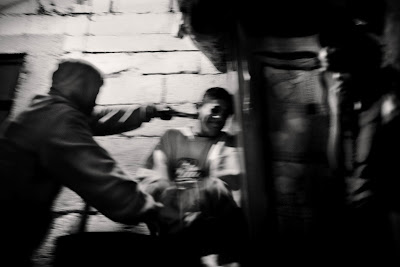
100 years ago the world was at war. The Great War, as World War 1 is known, involved more than 27 nations. More than 16 million people lost their lives and another 21 million were wounded. 100 years on and the machinations that drive countries to war are still firmly entrenched. Who says history never repeats? The top photograph was taken in 1916 in Romania. The bottom in Syria in 2014.

(Photo: AFP)

Box Collection:

Tim Page "21"

In 2010 British-born photojournalist Tim Page was named one of the “100 Most Influential Photographers of All Time,” by Professional Photographer magazine. Page, who is now 70 years old, has spent more than half a century immersed in the sometimes heady, often uncertain world of the photojournalist. He’s had books written about him, movies made and numerous international exhibitions. But perhaps one of his greatest challenges has been to select a mere 21 photographs from his archive of more than a quarter of a million negatives to create his limited edition boxed set “21”....(to read Alison Stieven-Taylor's story on L'Oeil de la Photographie please click here). (Photo: (C) Tim Page).

Book:

Nathan Miller - Somewhere in Jaffa

Israeli photographer Nathan Miller lived in close proximity to the port city of Jaffa for more than 20 years. As a young man in Tel Aviv, Miller rarely gave this ancient city a thought; he was more interested in seeing the world, than exploring his own backyard and spent years traversing the globe photographing cultural histories before ending up in Australia where he now lives.

As is often the case when it comes to creative projects, Miller’s ‘Somewhere in Jaffa’ began completely by chance. On a trip to Israel fate played its hand. Unable to find accommodation in Tel Aviv, Miller bedded down in Jaffa for the first time. “Suddenly a new world opened up to me and I fell in love,” he states...(to read the full review and see more photographs please click on the Book Reviews tab at the top of this blog). (Photo: (C) Nathan Miller)

Interview:

Rod McNicol

Australian photographer Rod McNicol has made a 36-year career out of a singular vision; to take portraits in the 19th Century ‘stare back’ style. Now a major survey of his work, ‘Memento Mori’, is on show in Melbourne.

McNicol was one of the early students of the now infamous Prahran College of the Arts in Melbourne. In its heyday in the seventies, and under the tutelage of one of the most creative, and unorthodox teaching staff, Prahran encouraged its students to genuinely think outside the box. But after a semester at Prahran McNicol decided the College environment wasn’t for him. “I knew I’d be locked into this obsession and I was right. Three and a half decades later and I’m still there”...(to read the full interview and see more photographs please click on the Feature Articles tab at the top of this blog). (Photo: (C) Rod McNicol).

Awards - The Winners:

Shannon Jensen wins Inge Morath Award

Viviane Dalles wins Canon Female Photojournalist 2014

Maxim Dondyuk win Rémi Ochlik Award

It is tremendous to see photographers that we've profiled on Photojournalism Now take out some of the major awards in our industry. In the last month three major awards have been announced and here are the winners:

Inge Morath Award

American photojournalist Shannon Jensen has won the 2014 Inge Morath Award. Jensen was selected for her photo essay "A Long Walk," which documents refugees fleeing the violence in Sudan through focusing on their footwear. This has been a controversial work for Jensen who has had mixed reviews. But the endorsement of Magnum Photos in naming Jensen this year's winner will enable her to complete her story, which may become a book. To see more of her work click here.

(C) Shannon Jensen

Canon Female Photojournalist

French photographer Viviane Dalles has been named this year's winner of the Canon Female Photojournalist Award from a pool of over 90 applicants from 26 countries. The competition, which is sponsored by ELLE magazine, carries an 8,000€ prize that Dalles will use to complete her project on teen pregnancy in northern France. To see more of her work click here.

Portrait: Viviane Dalles

Rémi Ochlik Award

Winner of this year's Prix de la Ville de Perpignan Rémi Ochlik Award is Ukrainian photographer Maxim Dondyuk. As part of the prize Dondyuk's work will be exhibited at this year's Visa pour l'Image in Perpignan in September. Earlier this year we featured Dondyuk's intense photo essay on the TB epidemic plaguing Ukraine on Friday Round Up (7 March). To view more of his work click here.

(C) Maxim Dondyuk

Exhibitions: Melbourne

Edmund Pearce - View from the Window until 19 July

(C) Justine Varga

Strange Neighbour - A Window that isn't there until 2 August

(C) Daniella Gullotta

Centre for Contemporary Photography - The Sievers Project until 31 August

(C) Jane Brown

Exhibitions: Sydney

Black Eye Gallery - Germinate until 13 July

(C) Eden Diebel

Art Gallery of NSW - Max Dupain Paris until 24 September

(C) Max Dupain


Wednesday, July 8, 2020

Photography art Gallery Friday Round Up - 4 September, 2015|Photography Art Definition

This week on Friday Round Up - Getty Images announces its grant winners at Visa Pour l'Image, Photoville gears up in New York and Photo Shanghai has its second outing.

But before turning to those stories, I want to write briefly about this heartbreaking image that rocked the world.

(Dogan News Agency / European Pressphoto Agency)

Nothing underpins the capacity of a photograph to move public opinion than that of the body of 3 year old Syrian boy Aylan Kurdi, washed up on a beach in Turkey. This photograph has been published around the world and shared many thousands of times on social media. It has made millions question their role as a citizen of the world and to call for action from their governments. It is heartbreaking, yet the horror of this reality is galvanising people across nations.

It has also given the media an opportunity to take back their place as the Fourth Estate, if only temporarily. Newspapers across Britain have run the photograph shaming the British government who is anticipated to make an announcement that it will take more refugees. In the US newspapers are also pushing for a greater refugee intake.

Media are also justifying why they chose to publish the photograph. Here is an excerpt from an editorial published in the Los Angeles Times written by Kim Murphy, Assistant Managing Editor, Foreign and National News who said it was "imperative" the paper publish this photograph:

We have written stories about migrants suffocated in trucks, run over by trains, drowned in capsized boats, but these tragedies have unfolded largely unwitnessed; here was a boy...whose fate forced anyone who saw him to confront the magnitude of the migrant crisis unfolding in Europe and the Middle East. A crisis that our nation, through the wars it has fought in the region, had a hand in igniting. A human drama that has seen European nations struggle to confront the streams of refugees, some of them fleeing horrific violence, who have turned up pleading at their doors — while the U.S. admitted just 36 Syrian refugees in fiscal 2013.” Click here to read the full story.

The Washington Post's Beirut Bureau Chief, Liz Sly, shared the photo of Aylan on Twitter on Wednesday after seeing it on a Turkish news site. Here's what she said:

“Instantly I received a huge response, mostly from people who said they too were deeply moved by the image. Some people, however, criticized me — and those retweeting me — for sharing the picture at all. This response puzzled me...How many photos of dead Syrian children show up on social media every day? Don’t people know what has been happening in Syria?

And then it occurred to me — perhaps they don’t.

My colleagues and I have been writing about Syria’s war for four years, about the desperation of the refugees who fled the country and the 250,000 people, including children, who have died over the course of the conflict. Some of us, Syrian and foreign journalists, have died, too, trying to tell their stories.

Yet it has seemed that no one really paid much attention — at least, not in terms of seriously trying to solve the problem, seriously trying to help. If it takes photographs of dead children to make people realize children are dying, so be it." You can read the full story here.

May the good in humanity prevail.

Awards:

2015 Getty Images Grants for Editorial Photography

The winners for this year's Getty Grants were announced at Visa Pour l'Image yesterday:

Salvatore Esposito for What is Missing?

(C) Salvatore Esposito/Getty Images Editorial Grants recipient 2015

(C) Salvatore Esposito/Getty Images Editorial Grants recipient 2015

(C) Salvatore Esposito/Getty Images Editorial Grants recipient 2015

(C) Salvatore Esposito/Getty Images Editorial Grants recipient 2015

(C) Salvatore Esposito/Getty Images Editorial Grants recipient 2015

This project explores the complicated social layers of Naples, telling the story of the city by analysing the feeblest and neediest social structures within the city. The work is captured with a desire to show the negligence that has arisen as a result of the city’s ruling class.

Javier Arcenillas for Latidoamerica

(C) Javier Arcenillas/Getty Images Editorial Grants recipient 2015

(C) Javier Arcenillas/Getty Images Editorial Grants recipient 2015

(C) Javier Arcenillas/Getty Images Editorial Grants recipient 2015

(C) Javier Arcenillas/Getty Images Editorial Grants recipient 2015

(C) Javier Arcenillas/Getty Images Editorial Grants recipient 2015

Honduras is considered one of the most violent places on earth. Every day on the streets of Honduras’ cities murders, robberies and violence are commonplace. This project aims to document the axis of uncontrolled violence in Honduras as social and political factors aggressively feed the issue.

Mojgan Ghanbari for Zanan

(C) Mojgan Ghanbari/Getty Images Editorial Grants recipient 2015

(C) Mojgan Ghanbari/Getty Images Editorial Grants recipient 2015

(C) Mojgan Ghanbari/Getty Images Editorial Grants recipient 2015

(C) Mojgan Ghanbari/Getty Images Editorial Grants recipient 2015

Iran, with a population of 77 million, is the third highest populated country in the Middle East, with a 50 percent female demographic and over 60 percent of the population under the age of 35. Profound changes took place in the country as a result of the Islamic revolution in 1979, which had a significant impact on the lives of women. Legislative changes to Islamic rules resulted in further restrictions being imposed on women; restrictions on community participation, enforcement of the mandatory hijab and the Family Protection Law. Despite every effort by the State to convey a positive image of Shia Muslim Iran, there are still many clauses that limit women and their civil rights. Women are legally prohibited from the presidency, and are discriminated against in senior leadership positions, judgeships and educational fields; inheritance laws are significantly prejudiced against women.

Matt Eich for Carry Me Ohio

(C) Matt Eich/Getty Images Editorial Grants recipient 2015

(C) Matt Eich/Getty Images Editorial Grants recipient 2015

(C) Matt Eich/Getty Images Editorial Grants recipient 2015

(C) Matt Eich/Getty Images Editorial Grants recipient 2015

Heroin has seen a resurgence across the United States in recent years, but it is keenly prevalent in Ohio. In 2010, 315 people in Ohio died in heroin-related deaths. By 2012 that number soared to 725. The state's response has been wide-ranging, with new laws creating stricter penalties for drug traffickers and creative ideas to expand treatment and needle-exchange programs. Although Ohio is at the vanguard of drug-prevention policy, the state's efforts appear to have their limits. Statistics show heroin is winning.

This year Getty Images received almost 400 applications from 78 countries. Each photojournalist will receive US$10,000 as well as collaborative editorial support from Getty Images. Getty Images Co-founder and Chief Executive Officer Jonathan Klein said, “The 2015 Getty Images Grants for Editorial Photography recipients exemplify the dedication, determination and integrity that define the photojournalism community. We strongly believe in the power of imagery to move the world and I am extremely proud that our grants programme continues to provide emerging and established photojournalists with the freedom to bring global attention to complex issues that otherwise may remain unseen.”

Getty Images has also announced that one of the Getty Images Editorial Grants will be renamed The David Laidler Memorial Award, in honour of former employee, the late David Laidler, who passed away last month. David was instrumental in bringing the Getty Images Grants for Editorial Photography programme to life.

Festivals & Fairs:

Photoville - New York City

Photoville is the largest annual photographic event in New York City with exhibitions housed in re-purposed shipping containers that create a modular venue in Brooklyn Bridge Park. In addition to the exhibitions are workshops and nightly screenings and events in the famed Photoville Beer Garden. This year there are more than 70 ‘container’ exhibitions as well as those works featured on the FENCE in Brooklyn Bridge Park, Boston, Atlanta and Houston. Here's a peek at what you can expect from this year's program:

Brenda Ann Kenneally’s Upstate Girls: Unraveling Collar City, an examination of post-industrial America through photographs, film and collected ephemera of young people as they come of age on one block in North Troy, NY

Daniel Berehulak’s Scenes From The Ebola Crisis, which covers his four-month, Pulitzer Prize-winning coverage of the Ebola crisis in Liberia, Sierra Leone and Guinea presented by The New York Times.

Eugene Richards’ Red Ball of a Sun Slipping Down, an examination of life in the impoverished Arkansas Delta forty years ago and today. The exhibition interweaves old black-and-white photographs with recent color photographs and a short story.

Jeff Sheng's Fearless, for which he photographed over 200 LGBT student athletes between 2003 and 2015

Matt Black’s The Geography of Poverty, an exhibition of images collected during a three-month, 30 state trip on which Black photographed some of America’s most destitute communities

Radcliffe Roye’s When Living Is a Protest, documenting the everyday reality of those living in the struggle for racial equality

Stephanie Sinclair’s Too Young to Wed, an exhibition of photographs documenting the millions of young girls who are forced into marriage.

Photoville

10-20 September

Brooklyn Bridge Park

Photo Shanghai Art Fair

Organised by the World Photography Organisation, the second edition of Photo Shanghai art fair features 50 international galleries and over 500 works of art. In addition Photo Shanghai also presents its education series, which includes a discussion panel on the role of photography in international museums with Christopher Phillips from ICP New York and Liu Heung Shing from ScOP, Shanghai. Last year the Fair attracted 25,000 visitors.

(C) August Sander, Three Farmers, 1928. Courtesy of Time Space Gallery, Beijing

(C) Luo Yongjin, Otherness - Curtain, Henan, 2014. Courtesy of OFOTO & ANART, Shanghai

(C) Ormond Gigli, Girls in the Windows, New York, 1960. Courtesy of Staley-Wise Gallery, New York

(C) Terry O'Neill, Brigitte Bardot, Spain, 1971. Courtesy of BEETLES+HUXLEY

(C) YANG Fudong, The Light That I Feel 1, 2014. Courtesy of ShanghART Gallery, Shanghai

11-13 September

Photo Shanghai

Shanghai Exhibition Centre

Wednesday, June 3, 2020

Photography art Gallery Friday Round Up - 4 December, 2015|Photography Art Definition

This week begins the December Book Reviews feature. For the next three weeks around six books will be reviewed each Friday in the lead to Christmas. This week a diverse selection from the US, Australia, the Arctic Circle, Bangladesh and Syria - Norma I. Quintana - Circus: A Traveling Life ; Evgenia Arbugaeva - Tiksi ; Issa Touma – Women We Have Not Lost Yet ; Berylouise Mitchell - The Birdsville Cup ; Khaled Hasan - Leave Me Alone ; and Ron Haviv - The Lost Rolls .

Book Reviews:

Norma I. Quintana ? Circus: A Traveling Life

My deep love of records and curiosity about the world are the two fundamentals that hold to attract me to documentary images. In modern day world photography is so many things to so many people, however for me it's miles a wealthy supply of facts, a manner to analyze the manner others stay, a conduit for insight, an possibility for compassion and expertise. It is likewise a magic carpet on which to experience into the unknown and return with new understanding and a more appreciation for the larger global.

Long-time period documentary research are the stories that surely engage me, particularly in present day fast-paced global where all of us is in a rush to the finish, ensuing in lots of memories being half-baked. I see a host of work produced each 12 months, plenty of which jogs my memory of an underdone dish - all of the substances are there, but in the frantic desire to get the plate at the table, a few elements are left raw, or now not included, leaving the diner less than satisfied and disenchanted because they realize it can be a lot higher with a little extra time and endurance.

Norma I. Quintana's Circus: A Traveling Life is a beautifully prepared dish, created over a decade. Her commitment to the story of this one-ring travelling circus has resulted in a rich, multi-layered insight into a world few of us can imagine, and even fewer will ever live.

On the surface Circus is a story of a tight knit community dedicated to its craft and a way of life that is becoming less sustainable in the digital age. Yet it is a story that goes so much deeper and that’s the appeal for me. In Circus Quintana’s photographs gently reveal the bonds between performers and the admiration of parents and children for the other’s talents as well as the drudgery of the daily grind, and the euphoria of performance. It is a complete picture that can only have been told over an extended period of time.

Photographed in black and white, on film using only available light, Circus is incredibly satisfying as a documentary body of work. Quintana combines more formal portraiture as well as casual behind-the-scenes moments showing the performers as artists as well as everyday people. This is not a story that could have been shot by dropping in for a couple of weeks and then disappearing.

Other reviewers have as compared Quintana's work to the likes of Diane Arbus, Bruce Davidson and Mary Ellen Mark and whilst those comparisons are obvious, Quintana additionally has a strong voice of her personal, a visible signature that conveys the intimacy and consider she earned along with her subjects. This is one of the genuine advantages of long time work; the opportunity to certainly get to realize the ones you're photographing, for it is through mutual admire and the sharing of lives that the heart of a story can be discovered.

? All pictures Norma I Quintana

Circus: A Traveling Life

Evgenia Arbugaeva ? Tiksi

?Once upon a time in Siberia, on the beaches of the Arctic Ocean, in a heat mattress in a small town, a touch lady awoke from a dream. It was morning, however it was still dark out, for the little town became up to now north that the solar might no longer display itself for plenty months. They called this the Polar Night?The metropolis was known as Tiksi??

Evgenia Arbugaeva was born in Tiksi, a Yakutian sea port in the Russian Arctic. Her family moved away when she was young, but as an adult she returned in 2010 to once again walk the frozen tundra. In Tiksi she recreates many of the scenes from her childhood, as well as capturing the lives of those who still reside in the remote community with its breathtaking landscape.

Arbugaeva?S paintings first came to my attention in advance this 12 months with her series Weatherman. I have lengthy been drawn to photos and documentaries of the Arctic, a international so foreign to an Antipodean. The ethereal colors of the icy waters, the full-size whiteness, the stark cold, the months of darkness all hold fascination. This book is pleasurable on many levels and is a visual deal with.

? All photographs Evgenia Arbugaeva

Publisher: The Eyes

Issa Touma ? Women We Have Not Lost Yet

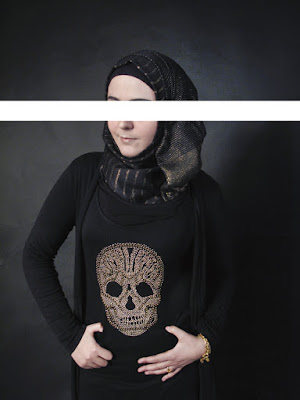
I met up with Syrian photographer Issa Touma at Paris Photo and bought his book Women We Have Not Lost Yet. This book features portraits of young Syrian women dressed in their daily clothes – modern, young women wearing make up, fashionable clothing, and jewellery. I really like the design of this book. Each portrait is split in two, with the picture divided at the eyes – we never see the women’s eyes. Rather we see the top of their heads above the eyebrows, or from the middle of their nose down. Without the eyes to draw focus you really have to look to see. The part portraits are presented in oversized A4 format, the top of one page featuring the first portrait of eyebrows to top of head, running across the top of the page, the remainder left crisp white. On the next page there is a strip of white across the top of the page that signifies the division of the portrait, and also points to an unwritten future.

Each portrait comes with a quick story in the phrases of the sitter, which makes the ebook even more applicable and gives a unique insight into the mind and resolve of these young ladies inside the face of adversity.

? All pics Issa Touma

This series changed into shot throughout the week of the ?Great Attack? In Aleppo on 26 April, 2015. In that week these younger ladies, of various ethnicities and spiritual backgrounds, sought safe haven in Touma?S Le Pont Gallery. The majority were former individuals of Art Camping, a collaborative challenge Touma began in 2012 in response to the outbreak of the Syrian struggle. Touma believes that ?Art is essential for surviving the horrors of battle and retaining the ideas of an inclusive society which can be threatened through political and religious fanaticism. This book documents the photograph periods held at Le Pont at some stage in the week of the Great Attack. It is a cry for freedom from the girls that Syrian society has no longer misplaced but ? To dying, exile or oppression?.

In 1996 Touma began Le Pont Gallery and the subsequent year the International Photography Festival Aleppo. You also can view an interview with Issa Touma - Postcards from Syria

Publisher: Paradox & André Frère Éditions

Berylouise Mitchell - The Birdsville Cup

Most Australians are familiar with the Birdsville Cup, which is oft referred to as the ‘Melbourne Cup of the Outback’. This two day racing carnival held annually in September in the remote outback town of Birdsville in Queensland - a mere 3200 kilometres west of Brisbane, literally in the middle of nowhere near the intersection of the Queensland, NSW and Northern Territory borders - has long held fascination for Australians, especially those city slickers who romanticise the outback and its stories, but Birdsville has one of the harshest climates on the planet. Its permanent population of around 120 swells to nearly 7000 when the Cup is on with visitors pitching tents, sleeping in vans and under the wings of light aircraft as there isn't any accommodation for rent.

As a student, photographer Berylouise Mitchell documented every aspect of the race. That was 25 years ago. To mark this anniversary she has published a book through crowd funding - The Birdsville Cup - donating 100 copies to the Birdsville community to raise funds for the Royal Flying Doctor Service, which is an essential service for those living remotely.

These black and white photographs are an important historical record and the story they tell is worth knowing. In the book Mitchell also makes special mention, in words and pictures, of the small towns she passed through on her way to Birdsville including Quilpie, Windorah and Betoota and the characters she met. Mitchell’s journey took her through some of the most remote towns in Australia and her gritty black and white images convey the isolation, dust and heat that is ever present. This is a unique slice of Australian history.

© All images Berylouise Mitchell

The Birdsville Cup

Khaled Hasan – Leave Me Alone

Shot in Bangladesh over a three-year period (2010-2013), Khaled Hasan’s documentation of the victims of acid attacks - Leave Me Alone - is not an easy book to view, but it tells an important and unfortunately a common story among those who live in the rural provinces of Bangladesh. Many of the victims of acid attacks are young women who are left disfigured and often blind, their opportunity for a ‘normal’ life stolen – in the majority of attacks acid is thrown in the woman’s face leaving permanent damage. But it is not only women who suffer. Men are also victims of acid attacks.

© All images Khaled Hasan

In Bangladesh there are scant medical or social resources to deal with those who are burned and maimed with many left to live with horrendous pain and emotional and physical scarring. Yet Hasan's book is not just about the victims, but about the human spirit and the strength of those pictured to forge ahead with the hope for a better life.

Published by KAUNAS PHOTO.

Ron Haviv - The Lost Rolls

VII co-founder and award-winning photojournalist Ron Haviv was also in Paris to launch his new book and magazine ‘The Lost Rolls’, which literally features photographs that Ron re-discovered when he found around 200 rolls of film he hadn’t processed. “There might be even more,” he smiles.

Of the 200 a number were blank, and some had only one frame worthwhile using. In the end there were about 140 rolls that were usable. Robert Peacock and Ron edited the photographs together basing the selection process on “the story behind the photograph, or lack of, and the actual photograph itself. Some had varying degrees of degradation and became more than what they were originally also,” Ron explains.

He says it was quite fascinating rediscovering images or finding other versions of photographs that had been published years ago and were quite well known. “There are also images here that I don’t know where I was, or who the people are or why I was photographing them. While that’s interesting in terms of a sense of mystery, it’s also disconcerting. And then there are images that I remember taking but never saw or couldn’t find. Some of those memories and adventures are now more complete. But I’ve also now created all sorts of other incomplete scenarios and I really now want to know what those images are”.

© All images Ron Haviv

This is Ron’s fourth book and his first self-publishing venture. He says nowadays it is a more complicated process to find a traditional publisher to take on a project and often that involves the photographer coming up with a substantial amount of money, usually around $25-30,000. With this project there was the additional cost of developing the film also. Ron teamed up with Blurb to produce ‘The Lost Rolls’ in a venture that helped both parties; it allowed Blurb to showcase its new technologies and Ron to develop the film and have control of the distribution and marketing.

“The stigma that existed with self-publishing even three or four years ago is no longer realistic. Distribution now is pretty easy, it’s been democratised and that was one of the reasons you’d go to a traditional publisher. The second would be the public relations around the book. Having done traditional publishing I’ve found they’re often terrible at that. So what’s the difference? It’s distribution and PR. So if you can do that as a photographer your book is going to be successful.”

The quality of the book is impressive, and Ron tells that it is printed offset, not digitally printed on demand. That’s an exciting development, making offset printing more affordable for self-publishers and raising the quality available. Blurb also offers warehousing and orders are made directly. The photographer chooses the production price and their mark up and Blurb manages the whole process. It doesn’t get any easier than that. PR is up to the photographer and as many today have large social media networks, getting the message out is relatively straightforward.

Ron chose to print around 1500 copies of ‘The Lost Rolls’ hardcover book. Given it was a Blurb project, Ron also had the opportunity to produce a magazine so Blurb could show off the other technologies available to photographers. “The magazine is really exciting, probably even more exciting than the books because it is obviously less expensive to produce and you have the ability to do a magazine of any size”.

“In differentiation to the book, we approached the Lost Rolls magazine more as an editorial – text on photographs, captions with the images. It was a cool way to do something different.”

Ron says the magazine concept opens up a whole lot of opportunities. VII is planning to produce a series of magazines. In fact this weekend just past, Ron and VII photographer Ashley Gilbertson presented at a conference in Boston and had available a VII magazine featuring the refugee work the agency’s photographers have done recently. “People want to have something in their hand. It’s great to have the iPad, but people still – not the masses but enough of an audience – want to flip through a magazine, they want to have something tangible”.

‘The Lost Rolls’ has both a French and English version, with different covers. Ron says that’s another benefit of self-publishing with Blurb, the ability to on the fly upload a new PDF of the book and adapt it for various markets.

Ron in Paris October 2015 © Alison Stieven-Taylor

“Blurb is a very smart company and Eileen (Gittins the founder) is quite brilliant in what she’s done,” Ron says. “I think this is my best book.”

The Lost Rolls