This week on Friday Round Up the focal point is on girls photographers: photo essays, one depicting the survivors 70 years after the atomic bombs had been dropped on Hiroshima and Nagasaki, and the other drawing cognizance on intellectual health in Bangladesh. Plus an exhibition of late nineteenth century images on the Tate Britain, and a few thrilling weekend studying about the New York Times, Snapchat and working with NGOs.
Photo Essay:
Keiko Hiromi - 70 Years After...
This is a great, and brilliantly finished, undertaking via Japanese photographer Keiko Hiromi. She has interviewed survivors of the Hiroshima and Nagasaki atomic bomb blasts and photographed them inside the places in which they have been at the day the bad strength of nuclear war became a truth. You can examine the entire interviews on her website here. Please take the time, these are crucial tales that have to now not be forgotten. Below are excerpts from a number of the stories.
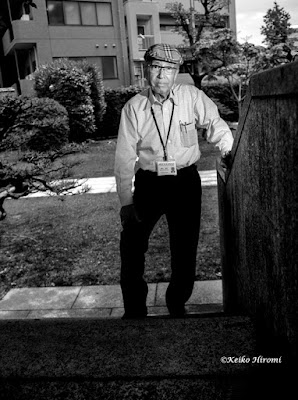
"The next morning, Hiroshima had been burned to dirt. I saw skeletons, dead bodies of half burned, carbonized bodies, swelled bodies whose gender you could not tell. It was eerily quiet. I walked back to my home in Miyajima. This is when I found out that my younger sister had died.” Hiroshi Hosokawa (above).

"A beam of strong light came in from northern window, and I wondered what it was. Then the huge blast broke through the windows. We did not know what to do, we were panicking. Everyone was crying. I guess I was crying, too.” Tamiko Shiroishi (above).

"On night of August 9th, we spent a night at the mountain. Nagasaki was burning. It was a cold night. I could not sleep. In the morning, I came down with my relatives to Nagasaki. This was when I first saw dead bodies. I was scared. But I also wanted to see it. I looked to the side. It was two men wearing a factory uniforms. They did not have any visible injuries. Nagasaki was covered with ashes, it was like snow. There was no road, we walked through ashes to air raid shelter. There were many skeletons in the ashes. There were a lot of dead bodies in the ruins. It smelled very strong. It must have been smell of bodies burning. Inside the air raid shelter, there were a lot of people. Many were badly injured and burned. The shelter was filled with crying and a horrible odor. They just lied there and dying, no one got treated." Sachiko Matsuo (above).

“On August 9, 1945, I heard a big bomb was dropped in Nagasaki. My entire family was in Nagasaki. I got ready, carried my youngest child (8 months old) on my back and held the hand of 3 years old Masahiro. I headed to Nagasaki within a few days. We took a boat to Mogi harbor, and walked approx. 10km to Nagasaki city. When I got to Nagasaki, I ran into one of my husband’s relatives. “Uragami is all gone” he said. I found a death toll. I did not see any of my family names. “Maybe they are alive” I had a hope. My hope was shuttered, when I found out that most of my family died of the blast instantly. There was no one to report the dead. There was nothing left in Uragami district. I did get to see one of my sisters who survived the blast. We stayed with her over night. Next morning, I said to her "take care and I will return soon." and I went back to Amakusa. When I came back to Nagasaki next time, she had died. I did not think she would die like that. I heard she lost all her hair before dying. She was 21 years old." Misao Hirano and her son Masahiro (above).
Photo Essay:
Allison Joyce - Mental Health in Bangladesh
I discovered this frame of labor in a latest article in Huck mag on the Koan Collective a group of six younger photojournalists. Allison Joyce is based in Mumbai and is tackling vital topics: abortion, riots, rape, lifestyles, death and the surroundings. Here's a choice of snap shots from her mission on mental fitness in Bangladesh.


All images (C) Allison Joyce
Out of interest, a 'koan" is a paradoxical anecdote or riddle without an answer, utilized in Zen Buddhism to illustrate the inadequacy of logical reasoning and provoke enlightenment. (Thanks to the Oxford Dictionary).
Exhibition: London
Painting with Light: Art and Photography from the Pre-Raphaelites to the Modern Age

1906: Photographer Minna Keene reinterprets Rossetti?S 'Prosperine' with this portrait of her daughter Violet, who also went on to be a photographer.
This exhibition features a number of photographs taken in the late 1800s and early twentieth century, illuminating the connections between early photography and Pre-Raphaelite and impressionist works. Amongst the photographs on show are works by six women photographers who were successful portrait artists and commercial photographers at that time. Check out the dramatic captions of Julia Margaret Cameron's works. Wonderful.

Isabella Grace by way of Clementina Hawarden (1861-62)

Julia Margaret Cameron "Call, I Follow, I Follow, Let Me Die!" 1867

Julia Margaret Cameron "So Like a Shatter'd Column Lay the King" 1875

Zaida Ben-Yusuf "The smell of pomegranates" 1899
On on the Tate Britain till 25 September
Interesting weekend analyzing:
Poynter:The New York Times of the Future is Beginning to Take Shape
Less stilted writing and more visible stories. "[Masthead editors] have been assembly with branch heads and others to acquire thoughts about the way to construct a newsroom that produces fewer perfunctory articles and a more array of tale bureaucracy, along with more visual journalism, and conversational writing."
TIME: Why Snapchat Could Change How Photographers Tell Stories
?Snapchat brings the reader into the story. Each viewer turns into part of the project. They are my tour companions,? John Stanmeyer.
Lensculture: Working with NGOs
MYOP director Olivier Laban-Mattei talks to Kyla Woods approximately the benefits of operating with an agency and the ethics at the back of running for NGOs.


